 Aage BohrNuclear physicist who showed with Ben Mottelson that atomic nuclei can deform and rotate; Prix Nobel de physique 1975 · 1975
 Aaron AaronsohnAgronomist qui a découvert wild emmer, the ancestor of cultivated wheat, and founded the first agricultural research station in the Land of Israel · 1906
 Aaron CiechanoverDécouverte de la dégradation des protéines par l'ubiquitine · 2004
 Aaron KlugCrystallographic Electron Microscopy · 1982
 Aaron T. BeckFather of cognitive behavioral therapy (CBT), the most-practiced psychotherapy in the world · 1960
 Abel WolmanStandardized the chlorination of drinking water — credited with ~91 million lives saved · 1919
 Abraham FraenkelCofondateur de axiomatic set theory (Zermelo-Fraenkel); first dean of mathematics at the Hebrew University of Jerusalem · 1891
 Abraham JacobiRegarded as the father of American pediatrics · 1830
 Abraham NitzanChimiste théoricien connu pour molecular electronics and charge transfer · 1944
 Abraham PaisPhysicien and historian of science; particle physics · 1918
 Abraham RobinsonA créé non-standard analysis · 1918
 Abraham TaubMécanique des fluides
 Abraham ZacutoAstronome and mathematician; his astronomical tables and improved astrolabe guided Portuguese and Spanish navigators including Vasco da Gama and Columbus · c. 1452 CE
 Abram BesicovitchGeometric measure theory; Besicovitch covering theorem · 1891
 Abram IoffePhysicien; 'father of Soviet physics', semiconductor research · 1880
 Ada YonathTravaux sur la structure et la fonction du ribosome · 2009
 Adam HellerElectrochemist connu pour glucose biosensors · 1933
 Adam PolitzerOtologist regarded as a founder of modern ear medicine. · 1835
 Adam RiessAstrophysicien; a découvert the accelerating universe, prix Nobel 2011 · 1969
 Adolf HurwitzComplex analysis and number theory; Hurwitz's theorem · 1859
 Adolf LindenbaumMathematical logic; Lindenbaum's lemma · 1904
 Adolf Magnus-LevyMédecin who pioneered the study of basal metabolism and metabolic disorders · 1865
 Adolf von BaeyerChimiste organicien who synthesized indigo dye; Prix Nobel de chimie 1905 · 1835
 Adolph FrankIndustrial chemist connu pour the potash industry and the cyanamide process · 1834
 Adrian KrainerA développé the first drug for spinal muscular atrophy (nusinersen); Prix Wolf in Medicine (2021) · 2021
 Aharon Katchalsky-KatzirBiophysicien who pioneered the study of polyelectrolytes and non-equilibrium thermodynamics in biology. · 1914
 Aharon RazinBiochimiste who helped establish the role of DNA methylation in gene control · 1935
 Akiva YaglomPhysicien connu pour turbulence theory and statistical fluid mechanics · 1921
 Alan BakerTranscendental number theory; linear forms in logarithms (Médaille Fields) · 1939
 Alan BernsteinBiologiste moléculaire and cancer/stem-cell researcher, founding head of the Canadian Institutes of Health Research · 1947
 Alan FershtChimiste who pioneered protein engineering to study enzyme catalysis and protein folding. · 1943
 Alan GuthPhysicien; proposed cosmic inflation · 1947
 Alan HeegerChimiste connu pour conductive polymers; Prix Nobel de chimie 2000 · 1936
 Albert BourlaGreek-American veterinary scientist; as chairman and CEO of Pfizer he staked the company on mRNA and delivered the Pfizer-BioNTech COVID-19 vaccine in nine months, refusing US government development… · 2020
 Albert EinsteinPhysicien qui a fondé special and general relativity and explained the photoelectric effect; Prix Nobel de physique 1921 · 1905
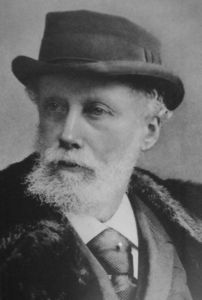 Albert LadenburgChimiste organicien connu pour structural studies of pyridine and benzene · 1842
 Albert MessiahPhysicien; auteur de a classic Quantum Mechanics textbook · 1921
 Albert MichelsonOptical precision instruments and interferometry; the Michelson–Morley experiment and decades of measurements of the speed of light; Prix Nobel de physique 1907 · 1907
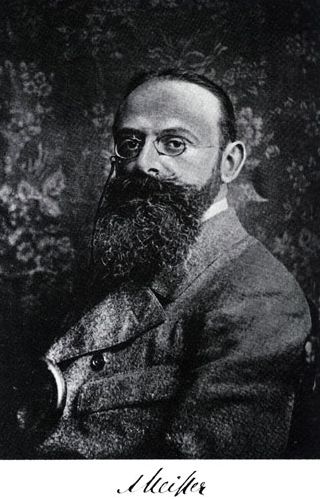 Albert NeisserMédecin qui a découvert the bacterium that causes gonorrhea. · 1855
 Albert NeubergerBiochimiste connu pour research on amino acid and protein metabolism · 1908
 Albert SabinOral Polio Vaccine · 1961
 Albert SalamonRadiologist, early pioneer of mammography
 Albert SalomonPionnier de the mammogram for early breast-cancer detection · 1913
 Albert SchatzMicrobiologiste who co-discovered streptomycin, the first antibiotic effective against tuberculosis. · 1920
 Albert SchwarzPhysique mathématique; topological quantum field theory · 1934
 Albert StarrImplanted the first successful artificial heart valve (Starr-Edwards valve) · 1926
 Alex LubotzkyGroup theory and expander graphs · 1956
 Alex ZungerPhysicien; computational materials science and inverse band-structure design · 1947
 Alexander BeilinsonGeometric representation theory; the Beilinson conjectures · 1957
 Alexander DesslerSpace physicist connu pour research on magnetospheric and space plasma physics · 1928
 Alexander FriedmannPhysicien; the Friedmann equations describing the expanding universe · 1888
 Alexander GiventalSymplectic geometry and mirror symmetry · 1958
 Alexander GrothendieckReshaped algebraic geometry with scheme theory (Médaille Fields) · 1928
 Alexander GutmanMédecin-scientist, research on uric acid metabolism and gout · 1902
 Alexander HollaenderFondateur de radiation biology; Fermi Award (1983) · 1983
 Alexander KompaneetsPhysicien; the Kompaneets equation for photon-electron scattering · 1914
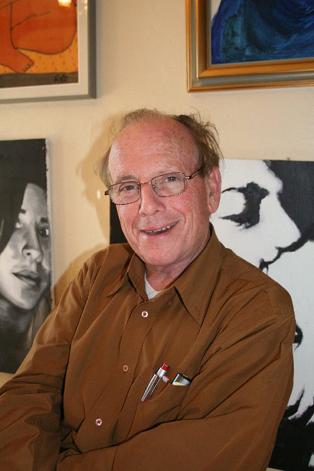 Alexander LevitzkiBiochimiste who pioneered signal transduction inhibitors (tyrphostins) as cancer drugs · 1940
 Alexander LuriaFondateur de modern neuropsychology and the study of the brain's functional organization. · 1902
 Alexander OstrowskiAnalyse mathématique and number theory; Ostrowski's theorem on valuations · 1893
 Alexander PinesChimiste physicien connu pour solid-state NMR spectroscopy · 1945
 Alexander PolyakovPhysicien théoricien; major contributions to quantum field theory and string theory · 1945
 Alexander RudenskyImmunologiste, research on regulatory T cells and immune tolerance · 1956
 Alexander S. WienerImmunohematologist who co-discovered the Rh blood factor with Karl Landsteiner, making safe transfusion and the treatment of haemolytic disease of the newborn possible · 1907
 Alexander VarshavskyBiologiste qui a découvert the ubiquitin system's N-end rule governing protein lifespan. · 1946
 Alexander WeinsteinApplied mathematics; singular partial differential equations · 1897
 Alexandre BesredkaImmunologiste who advanced the understanding of anaphylaxis and local immunity. · 1870
 Alexandre ChorinComputational fluid dynamics; the projection method · 1938
 Alexei AbrikosovPhysicien; theory of the vortex lattice in type-II superconductors (1957), Prix Nobel de physique 2003 · 1928
 Alexei StarobinskyPhysicien; pionnier de cosmic inflation theory · 1948
 Alfred BaderChimiste and founder of the Aldrich Chemical Company · 1924
 Alfred EinhornChimiste who synthesized procaine (Novocain), the first safe injectable local anesthetic. · 1856
 Alfred GilmanA reçu le 1994 prix Nobel for the discovery of G-proteins and their role in cellular signal transduction. · 1941
 Alfred GoldbergBiologiste qui a découvert how cells degrade proteins, laying groundwork for proteasome-targeting drugs. · 1942
 Alfred HaarHaar measure and the Haar wavelet · 1885
 Alfred HessMédecin whose nutritional research helped conquer scurvy and rickets · 1875
 Alfred LandéPhysicien; the Landé g-factor in atomic spectroscopy · 1888
 Alfred LoewyAlgèbre; theory of linear differential equations · 1873
 Alfred LotkaMathematical biologist qui a co-créé the Lotka-Volterra equations of population dynamics. · 1880
 Alfred MirskyCell biologist who advanced understanding of chromatin and the cell nucleus · 1900
 Alfred PringsheimAnalyse mathématique; theory of infinite series and continued fractions · 1850
 Alfred SommerÉpidémiologiste who showed vitamin A prevents childhood blindness and death · 1942
 Alfred TauberAnalyse mathématique; Tauberian theorems · 1866
 Allen BardElectrochemist, developer of scanning electrochemical microscopy · 1933
 Alvin WeinbergPhysicien; nuclear reactor design and molten-salt reactors · 1915
 Amatus LusitanusRenaissance physician who described the valves of the veins and advanced clinical medicine. · 1511
 Amedee MannheimGeometry; a développé the modern slide rule · 1831
 Amelia GreenwaldAmerican nurse Amelia Greenwald focused her career in public health nursing on training other nurses and creating infrastructure in war-ravaged Europe. · 1881
 Amnon YarivPhysicien; optoelectronics and integrated photonics · 1930
 Amos de ShalitPhysicien; nuclear structure theory, fondateur de Israeli physics · 1926
 Amotz ZahaviEvolutionary biologist who proposed the handicap principle explaining costly signals in animals. · 1928
 Ana PaukerBorn to an impoverished Orthodox family in Bucharest, Ana Pauker joined the Romanian communist movement in 1915.
 Anatol ZhabotinskyBiophysicien connu pour the Belousov-Zhabotinsky oscillating chemical reaction · 1938
 Anatole AbragamChimiste physicien and physicist, pionnier de nuclear magnetism and magnetic resonance · 1914
 Anatoliy VershikRepresentation theory, dynamics, and asymptotic combinatorics · 1933
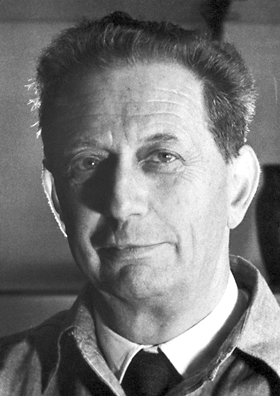 André LwoffA reçu le 1965 prix Nobel for work on lysogeny and the genetic control of viruses. · 1902
 Andre WeilThéorie des nombres and algebraic geometry; the Weil conjectures · 1906
 Andrea GhezAstronome whose measurements of stellar orbits revealed the supermassive black hole at the centre of the Milky Way; Prix Nobel de physique 2020 · 1965
 Andrés LagunaHumanist physician to Charles V and Pope Julius III, traducteur and commentator of Dioscorides (1555) · 1555
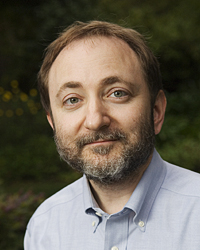 Andrew FireLauréat du prix Nobel in medicine (2006) for the discovery of RNA interference (gene silencing) · 2006
 Andrew SesslerPhysicien; accelerator physics and human rights advocacy · 1928
 Andrew StromingerPhysicien; string theory and black hole entropy counting · 1955
 Andrzej MostowskiMathematical logic; the Mostowski collapse · 1913
 Anna KaplanAnna Kaplan was an American Jewish nurse who contributed significantly to developing the concept of nursing as a profession in Erez Israel at the beginning of the twentieth century.
 Anne WojcickiCo-founder and CEO of 23andMe (2006), which brought personal genetics to millions. · 2006
 Anthony EpsteinPathologiste who co-discovered the Epstein-Barr virus, the first virus linked to human cancer. · 1921
 António Nunes Ribeiro SanchesMédecin of the Enlightenment, member of the academies of St Petersburg and Paris, expelled from Russia for his Jewish origin · 1747
 Arieh WarshelComputational chemist who, with Michael Levitt, published the first computer model of an enzymatic reaction (the QM/MM approach); Prix Nobel de chimie 2013 · 2013
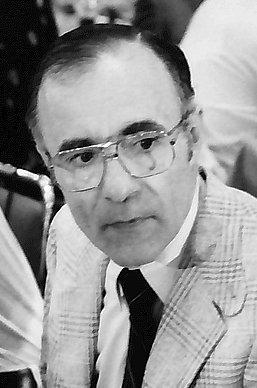 Arno PenziasRadio astronomer, a child refugee of the Kindertransport, who with Robert Wilson discovered the cosmic microwave background, the afterglow of the Big Bang; Prix Nobel de physique 1978 · 1933
 Arnold LevineBiologiste moléculaire qui a découvert the p53 tumor-suppressor protein, central to cancer biology. · 1939
 Arnold PickNeurologue and psychiatrist who first described the dementia now called Pick's disease. · 1851
 Arnold RichPathologiste connu pour research on tuberculosis and hypersensitivity · 1893
 Arnold SiegertPhysicien (theoretical physics)
 Arpad NadaiPionnier de plasticity theory; Timoshenko Medal (1958) · 1883
 Arthur AshkinPhysicien at Bell Labs qui a inventé optical tweezers and applied them to living cells; Prix Nobel de physique 2018 · 1922
 Arthur BersonMétéorologue and pioneer of high-altitude balloon research into the upper atmosphere · 1859
 Arthur EichengrunChimiste who played a central role in the development of aspirin. · 1867
 Arthur HorwichBiologiste qui a découvert chaperonins, the cellular machines that fold proteins. · 1951
 Arthur JaffeConstructive quantum field theory · 1937
 Arthur KornMécanique des milieux continus
 Arthur KornbergDNA Synthesis · 1959
 Arthur RobertsBiomedical researcher
 Arthur Rosenfeld'Godfather of energy efficiency'; Fermi Award (2005) · 2005
 Arthur SchawlowPhysicien who with Charles Townes laid the theoretical foundations of the laser and then developed high-precision laser spectroscopy; Prix Nobel de physique 1981 · 1921
 Arthur SchonfliesCrystallographic groups and topology; the Schonflies problem · 1853
 Arthur SchusterPhysicien connu pour periodogram analysis and work on terrestrial magnetism and radiative transfer · 1851
 Aryeh DvoretzkyAnalyse fonctionnelle; Dvoretzky's theorem on convex bodies · 1916
 Asher PeresPhysicien; pionnier de quantum information and teleportation · 1934
 August von WassermannBacteriologist who devised the Wassermann test, the first diagnostic blood test for syphilis. · 1866
 Aurel WintnerAnalyse mathématique, probability, and celestial mechanics · 1903
 Avi LoebAstrophysicien; black holes, the early universe and the search for extraterrestrial life · 1962
 Aviv RegevComputational biologist and a founder of the Human Cell Atlas using single-cell genomics. · 1971
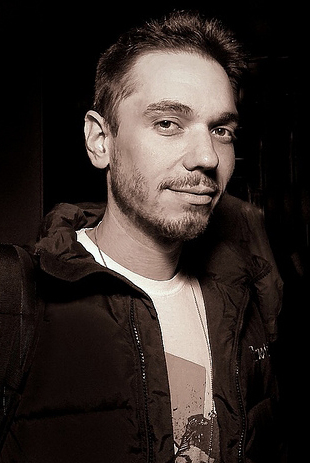 Avram GoldsteinPharmacologue who helped discover the brain's endorphins and opiate receptors. · 1919
 Avram HershkoDécouverte de la dégradation des protéines par l'ubiquitine · 2004
 Axel KahnProminent French geneticist and bioethicist; president of the French League Against Cancer. Jewish paternal ancestry. · 1990
 Barnett RosenbergChimiste qui a découvert cisplatin, a mainstay of cancer chemotherapy. · 1926
 Barry BarishPhysicien; leadership of LIGO detection of gravitational waves, prix Nobel 2017 · 1936
 Barry BloomImmunologiste and public health leader in tuberculosis and vaccine research · 1937
 Barry CommonerBiologiste and a founding figure of the modern environmental movement. · 1917
 Barry MazurThéorie des nombres and arithmetic geometry; foundational to Fermat's proof · 1937
 Barry SaltzmanClimate scientist connu pour dynamical modeling of climate and the ice ages · 1931
 Barry SimonPhysique mathématique; Schrodinger operators · 1946
 Barry TrostChimiste organicien connu pour atom economy and the Tsuji–Trost reaction · 1941
 Baruch BlumbergVirus et vaccin de l'hépatite B · 1976
 Baruj BenacerrafA découvert the immune response (Ir) genes of the major histocompatibility complex that control the strength of immune reactions; Prix Nobel de physiologie ou médecine 1980; president of the… · 1920
 Basil HirschowitzGastroenterologist qui a inventé the fiberoptic endoscope. · 1925
 Beatrice MintzDevelopmental geneticist who pioneered techniques for creating chimeric and transgenic mice. · 1921
 Bela SchickPediatrician who devised the Schick test to detect susceptibility to diphtheria. · 1877
 Ben MottelsonLauréat du prix Nobel in physics (1975) for nuclear structure; Atoms for Peace Award (1969) · 1975
 Benedict GrossThéorie des nombres; the Gross-Zagier theorem · 1950
 Benedict StillingNeuroanatomist who pioneered serial sectioning of the spinal cord and coined 'neuroglia' · 1810
 Beniamino SegreGéométrie algébrique and combinatorial geometry · 1903
 Benjamin GompertzActuarial mathematics; the Gompertz law of mortality · 1779
 Benjamin LaxPhysicien; magneto-optics and semiconductor physics · 1915
 Benjamin RubinMicrobiologiste qui a inventé the bifurcated needle used to eradicate smallpox · 1917
 Benjamin SanterClimate scientist who identified the human fingerprint on global warming; Rossby Medal (2024) · 1955
 Benno StraussMetallurgist who co-developed stainless steel · 1873
 Beno EckmannTopologie algébrique; Eckmann-Hilton duality · 1917
 Beno GutenbergSeismologist who co-developed the Richter magnitude scale and determined the depth of Earth's core · 1889
 Benoit MandelbrotMathématicien qui a fondé fractal geometry, widely applied to natural and Earth science patterns · 1924
 Beppo LeviReal analysis; the Beppo Levi monotone convergence theorem · 1875
 Bernard FantusMédecin who established the first hospital blood bank. · 1874
 Bernard FisherChirurgien who transformed breast cancer treatment by showing that less-radical surgery is equally effective. · 1918
 Bernard HoreckerBiochimiste who helped elucidate the pentose phosphate pathway · 1914
 Bernard KatzShowed that acetylcholine is released at the nerve-muscle junction in packets of fixed size (quanta); Prix Nobel de physiologie ou médecine 1970 · 1970
 Bernard KouchnerMédecin français qui a cofondé Médecins Sans Frontières (Prix Nobel de la paix 1999); Jewish father · 1971
 Bernard LownCo-inventor of the defibrillator; a cofondé IPPNW (Prix Nobel de la paix 1985) · 1980
 Bernard PullmanQuantum chemist connu pour quantum studies of biological molecules · 1919
 Bernard SachsNeurologue who co-described Tay-Sachs disease, a fatal inherited neurological disorder. · 1858
 Bernd MatthiasPhysicien; a découvert many superconducting and ferroelectric materials · 1918
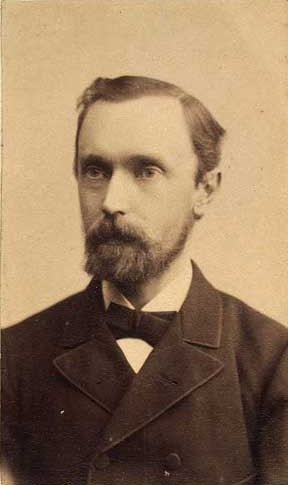 Bernhard HaurwitzMétéorologue qui a développé the theory of atmospheric planetary (Rossby) waves · 1905
 Bernhard ZondekGynecologist who co-developed the Aschheim-Zondek pregnancy test. · 1891
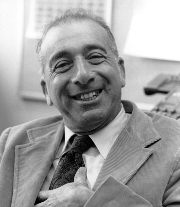 Berni AlderChimiste physicien, pionnier de molecular dynamics computer simulation · 1925
 Bert VogelsteinCancer geneticist who mapped the genetic mutations driving colorectal cancer progression. · 1949
 Bertram KostantRepresentation theory and Lie group theory · 1928
 Bertrand GoldschmidtChimiste français of plutonium separation; cofondateur de the CEA; Atoms for Peace Award (1967) · 1967
 Bertrand HalperinPhysicien; condensed matter theory and the quantum Hall effect · 1941
 Bonnie BasslerMicrobiologiste who elucidated quorum sensing, the chemical communication between bacteria. · 1962
 Bonnie BergerMathématicien, computational biology and algorithms
 Boris EphrussiGénéticien who pioneered the study of cytoplasmic (non-chromosomal) inheritance and somatic cell genetics. · 1901
 Boris GalerkinThe Galerkin method for solving differential equations · 1871
 Boris LevitanInverse spectral theory and almost periodic functions · 1914
 Boris PodolskyPhysicien; co-author of the EPR paradox in quantum mechanics · 1896
 Boris VolynovSoviet cosmonaut, the first person of Jewish descent to fly in space (Soyuz 5) · 1969
 Bradley EfronStatistique; a inventé the bootstrap resampling method · 1938
 Branko GrunbaumDiscrete and combinatorial geometry; polytopes and tilings · 1929
 Bret WeinsteinEvolutionary biologist and DarkHorse Podcast host; the Evergreen 2017 affair made him a national figure of the campus-speech debate. · 2017
 Brian DrukerOncologue qui a développé imatinib (Gleevec), a breakthrough targeted therapy for leukemia. · 1955
 Brian GreenePhysicien; string theory research and popular science communication · 1963
 Brian JosephsonPhysicien who, as a 22-year-old research student in Cambridge, predicted the Josephson effect, the tunnelling of a supercurrent between two superconductors; Prix Nobel de physique 1973 · 1940
 Bruce AlbertsBiochimiste, lead author of the textbook Molecular Biology of the Cell and former president of the US National Academy of Sciences. · 1938
 Bruce AmesBiochimiste who devised the Ames test, a widely used assay for detecting chemical mutagens and carcinogens. · 1928
 Bruce BerneChimiste théoricien connu pour molecular dynamics and statistical mechanics · 1940
 Bruce BeutlerFound that Toll-like receptor 4 is the sensor of bacterial lipopolysaccharide that switches on innate immunity; Prix Nobel de physiologie ou médecine 2011 · 1957
 Bruno PontecorvoPhysicien; theory of neutrino oscillations · 1913
 Bruno RossiPhysicien; cosmic-ray physics and founding of X-ray astronomy · 1905
 Bruno TouschekPhysicien; a construit the first electron-positron collider (AdA) · 1921
 Bryce DeWittPhysicien; canonical quantum gravity and the Wheeler-DeWitt equation · 1923
 Burrill CrohnGastroenterologist who first described the inflammatory bowel disorder now called Crohn's disease. · 1884
 Burton RichterPhysicien; a découvert the J/psi particle (charm quark), prix Nobel 1976 · 1931
 C. Ronald KahnEndocrinologist who elucidated insulin signaling and its role in diabetes · 1944
 Carl BendaCytologist qui a découvert and named the mitochondria. · 1857
 Carl BenderMathematical physicist; asymptotic methods and PT-symmetric quantum mechanics · 1943
 Carl BorchardtAnalyse mathématique and the arithmetic-geometric mean · 1817
 Carl DjerassiChimiste who first synthesized an orally active progestin, making the contraceptive pill possible. · 1923
 Carl JacobiMathématicien; foundational work in elliptic functions, dynamics and the Jacobian determinant · 1804
 Carl KollerOphthalmologist who introduced local anesthesia by using cocaine in eye surgery. · 1857
 Carl LiebermannChimiste organicien who helped synthesize the dye alizarin · 1842
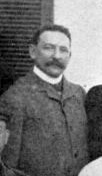 Carl NeubergBiochimiste often called the father of modern biochemistry for his work on fermentation. · 1877
 Carl SaganAstronome; planetary science and renowned science communicator · 1934
 Carl WeigertPathologiste qui a développé key tissue-staining methods, including stains for bacteria and myelin. · 1845
 Carla ShatzNeuroscientifique who showed how neural activity shapes brain wiring during development. · 1947
 Carlo Di CastroPhysicien; renormalization group in condensed matter theory · 1937
 Carlos KenigHarmonic analysis and nonlinear dispersive PDEs · 1953
 Carol HallChemical engineer connu pour biomolecular and polymer modeling · 1946
 Casimir FunkCoined the term 'vitamine' and advanced vitamin-deficiency theory · 1912
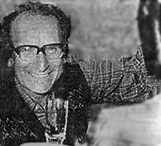 César MilsteinA reçu le 1984 prix Nobel for developing the technique to produce monoclonal antibodies. · 1927
 Cesare LombrosoMédecin and a founder of modern criminology and forensic psychiatry. · 1835
 Chad MirkinChimiste connu pour nanotechnology and spherical nucleic acids · 1963
 Chaim PekerisGeophysicist connu pour work on seismology and the free oscillations of the Earth · 1908
 Chaim WeizmannAcetone-Butanol-Ethanol Fermentation · 1916
 Chaim Zelig SlonimskiPionnier de science in Hebrew, inventeur of a calculating machine and founder of Ha-Tsefirah · 1862
 Charles FeffermanHarmonic analysis and PDEs (Médaille Fields) · 1949
 Charles KelmanA inventé phacoemulsification, transforming cataract surgery · 1930
 Charles LieberChimiste connu pour nanowires and nanoscale materials · 1959
 Charles LoewnerComplex analysis; the Loewner differential equation · 1893
 Charles NewmanThéorie des probabilités and mathematical statistical physics · 1946
 Charles WeissmannBiologiste moléculaire who cloned interferon and advanced prion research. · 1931
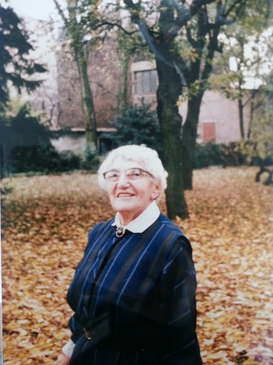 Charlotte AuerbachGénéticien qui a découvert chemical mutagenesis, showing that chemicals can cause genetic mutations. · 1899
 Charlotte FriendMicrobiologiste who advanced viral oncology through her discovery of the Friend leukemia virus. · 1921
 Charlotte WolffA pioneering German-Jewish lesbian and feminist physician, Charlotte Wolff became interested in sexology, psychotherapy, and chirology while working as a physician in Berlin’s working-class…
 Christian AnfinsenShowed with ribonuclease that a protein's amino-acid sequence alone determines its folded, active shape; Prix Nobel de chimie 1972 · 1972
 Claire FaginClaire Fagin was a distinguished nursing educator, scholar, and dean, as well as the first woman interim president of the University of Pennsylvania and the first female to achieve this position in… · 1926
 Clara ImmerwahrFirst woman to earn a doctorate in chemistry at the University of Breslau; opposed the use of poison gas in war · 1900
 Claribel ConeClaribel Cone was well known in her time for being a dignified and highly independent woman with two passions: medical research and collecting art and artifacts. · 1864
 Claude Cohen-TannoudjiPhysicien; methods to cool and trap atoms with laser light, Prix Nobel de physique 1997; co-author of the textbook Quantum Mechanics · 1997
 Claude ItzyksonPhysicien; quantum field theory (co-author of a standard textbook) · 1938
 Clifford TabinDevelopmental geneticist who elucidated the genetic control of limb formation · 1954
 Clifford TaubesGauge theory and differential geometry · 1954
 Corrado SegreFondateur de the Italian school of algebraic geometry · 1863
 Daan FrenkelComputational chemist connu pour molecular simulation of soft matter · 1948
 Dan ShechtmanQuasi-cristaux · 2011
 Daniel ArnonPlant physiologist who elucidated photophosphorylation, the mechanism by which plants convert light into chemical energy. · 1910
 Daniel ChamovitzPlant geneticist qui a découvert the COP9 signalosome, auteur de 'What a Plant Knows' (2012), seventh president of Ben-Gurion University of the Negev (2019) · 2019
 Daniel CohenGénéticien who led production of the first physical map of the human genome (Genethon/CEPH) · 1951
 Daniel DruckerEndocrinologist whose GLP-1 research underlies modern diabetes and obesity drugs. · 1956
 Daniel GoldstonNumber theorist of small gaps between primes; Cole Prize (2014) · 2014
 Daniel GorensteinA dirigé the classification of finite simple groups · 1923
 Daniel KanHomotopy theory; simplicial sets and Kan complexes · 1927
 Daniel KaneComplexity theorist and mathematician; Prix Gödel laureate (2026) · 2026
 Daniel KleppnerPhysicien; atomic clocks and Rydberg atoms · 1932
 Daniel MattisPhysicien; magnetism and exactly solvable many-body models · 1932
 Daniel MaziaCell biologist connu pour foundational research on cell division (mitosis) · 1912
 Daniel NathansUsed restriction enzymes to cut the DNA of the tumour virus SV40 into defined fragments and map it, founding a basic method of molecular biology; Prix Nobel de physiologie ou médecine 1978 · 1928
 Daniel RothmanGeophysicist connu pour mathematical modeling of Earth's carbon cycle and mass extinctions · 1957
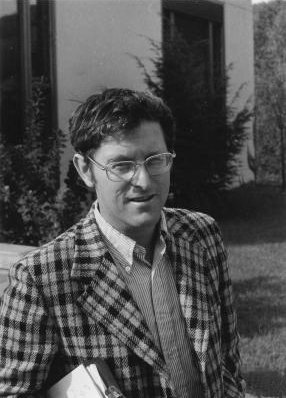 Daniel StroockProbability; the Stroock-Varadhan martingale problem · 1940
 Daniel WiseGeometric group theory; special cube complexes · 1971
 David AtlasMétéorologue qui a inventé and developed weather radar and Doppler weather radar · 1924
 David BakerBiochimiste qui a créé the Rosetta software and designed Top7, the first protein with a structure unknown in nature; Prix Nobel de chimie 2024 for computational protein design · 1962
 David BaltimoreA découvert reverse transcriptase (1970), the enzyme retroviruses such as HIV use to copy RNA into DNA; Prix Nobel de physiologie ou médecine 1975; president of Caltech 1997–2006 · 1975
 David BodianNeuroanatomist whose research on poliovirus was essential to the development of the polio vaccine. · 1910
 David BotsteinGénéticien who pioneered the use of DNA markers to map the human genome. · 1942
 David ChandlerChimiste théoricien connu pour statistical mechanics of liquids · 1944
 David DeutschPhysicien; pionnier de quantum computation and the universal quantum computer · 1953
 David FinkelsteinPhysicien; understanding of the black hole event horizon · 1929
 David Frank-KamenetskyPhysicien; combustion theory and astrophysics · 1910
 David GaleThéorie des jeux and mathematical economics; Gale-Shapley algorithm · 1921
 David GrossPhysicien; a découvert asymptotic freedom in QCD, prix Nobel 2004 · 1941
 David HarbaterGéométrie algébrique; the inverse Galois problem · 1952
 David JuliusA reçu le 2021 prix Nobel in Medicine for discovering receptors for temperature and touch · 1955
 David KazhdanRepresentation theory; Kazhdan's property (T) · 1946
 David KeilinBiologiste qui a découvert the cytochromes and their role in cellular respiration. · 1887
 David KlenermanChimiste who co-invented next-generation DNA sequencing (the technology behind Illumina/Solexa). · 1959
 David LeePhysicien; with Douglas Osheroff and Robert Richardson discovered superfluidity in helium-3 at Cornell in 1972, Prix Nobel de physique 1996 · 1931
 David LesterBiomedical researcher
 David LipmanBioinformatics pioneer, co-developer of BLAST and longtime director of NCBI · 1956
 David MilsteinChimiste connu pour catalysis and metal-ligand bond activation · 1947
 David NathanPionnier de pediatric hematology; National Medal of Science (1990) · 1990
 David RittenbergBiochimiste who pioneered the use of isotopic tracers to study metabolism · 1906
 David SchoenbergPhysicien; the de Haas-van Alphen effect and superconductivity · 1911
 David SpergelAstrophysicien; analyse mathématique of the cosmic microwave background (WMAP) · 1961
 David StolerPhysicien (quantum optics, squeezed states)
 David WolfNASA astronaut and physician who lived aboard the Mir space station and performed multiple spacewalks · 1997
 David YudinOptimization; the ellipsoid method · 1919
 Deborah DoniachImmunologiste who helped establish the concept of organ-specific autoimmune disease. · 1912
 Denes KonigA écrit the first textbook on graph theory; Konig's theorem · 1884
 Dennis GaitsgoryProof of the geometric Langlands conjecture · 1973
 Dennis KasperMicrobiologiste and immunologist, research on bacterial polysaccharides and vaccines · 1943
 Dennis SciamaCosmologist; mentor of a generation of relativists and cosmologists · 1926
 Don ZagierThéorie des nombres; modular forms and the Gross-Zagier theorem · 1951
 Donald BrownDevelopmental biologist who pioneered the isolation and study of individual genes · 1931
 Donald GlaserPhysicien; a inventé the bubble chamber (1952), Prix Nobel de physique 1960; later a pioneer of biotechnology (Cetus) and of vision neuroscience · 1926
 Donald OrnsteinErgodic theory; the Ornstein isomorphism theorem · 1934
 Dorian GoldfeldThéorie des nombres; the class number problem · 1947
 Doron ZeilbergerCombinatoire; computerized proof of hypergeometric identities · 1950
 Douglas OsheroffPhysicien; as a Cornell graduate student co-discovered superfluidity in helium-3 in 1972, Prix Nobel de physique 1996 · 1945
 Drew WeissmanMédecin and immunologist who with Katalin Karikó found the nucleoside base modifications that made mRNA vaccines against COVID-19 possible; Prix Nobel de physiologie ou médecine 2023 · 2023
 Edith BülbringGerman-born scientist Edith Bülbring was renowned for her work in smooth muscle physiology, which paved the way for contemporary cellular investigations. · 1903
 Edmond FischerA reçu le 1992 prix Nobel for discovering reversible protein phosphorylation as a biological regulatory mechanism. · 1920
 Edmund KleinDermatologist, pionnier de topical cancer immunotherapy · 1922
 Edmund LandauAnalytic number theory; popularized big-O notation · 1877
 Édouard BrézinFrench theorist of critical phenomena; Dirac Medal (2011) · 2011
 Eduard DonathChimiste connu pour technical and applied chemistry · 1848
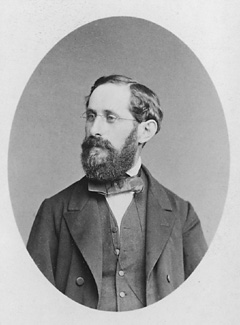 Eduard HeineAnalyse mathématique; the Heine-Borel theorem · 1821
 Eduard SuessGéologue qui a fondé modern tectonics and hypothesized the supercontinent Gondwanaland · 1831
 Edward GinztonPhysicien; microwave technology and medical linear accelerators · 1915
 Edward KasnerGéométrie différentielle; coined the term 'googol' · 1878
 Edward OttChaos theorist and co-inventor of chaos control; Richardson Medal (2017) · 1941
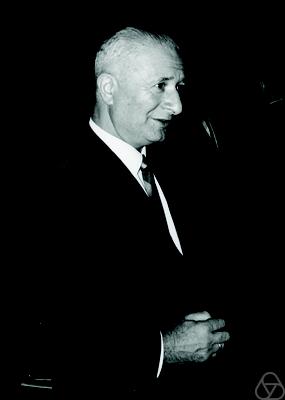 Edward Szpilrajn-MarczewskiMeasure theory and dimension theory · 1907
 Edward TellerHydrogen Bomb · 1952
 Edward WittenPhysique mathématique and string theory; only physicist to win the Médaille Fields · 1951
 Edward ZipserMétéorologue connu pour research on tropical convection and mesoscale weather systems · 1939
 Edwin CohnDevised the cold ethanol fractionation of blood plasma at Harvard, yielding albumin, gamma globulin, fibrinogen and thrombin; the Cohn process is still the basis of the plasma industry · 1940
 Edwin Kessler IIIMétéorologue connu pour radar meteorology and the study of severe storms · 1928
 Edwin SalpeterAstrophysicien; stellar nucleosynthesis and the Salpeter mass function · 1924
 Edwin SpanierTopologie algébrique; auteur de a standard textbook · 1921
 Efim FradkinPhysicien théoricien; quantum field theory and quantum gravity · 1924
 Efim ZelmanovGroup theory; solved the restricted Burnside problem (Médaille Fields) · 1955
 Efraim RackerBiochimiste who reconstituted and elucidated the enzyme that synthesizes ATP. · 1913
 Egon OrowanPhysicien who helped develop the theory of crystal dislocations and applied it to plate tectonics · 1902
 Ehud HrushovskiModel theory and its applications to algebra · 1959
 Eitan TadmorIsraeli-American pioneer of numerical methods for conservation laws; Wiener Prize (2022) · 2022
 Elaine OranPionnier de computational combustion; APS Fluid Dynamics Prize (2013) · 1946
 Elena Gal'pernChimiste who theoretically predicted the structure of the C60 fullerene · 1930
 Elga Ruth WassermanChimiste Elga Wasserman – a recipient of a Ph.D. in organic chemistry from Harvard in 1949 and a J.D. from Yale in 1976 – is best connu pour overseeing the entrance of the first coeducational class… · 1924
 Eli YablonovitchPhysicien; fondateur de the field of photonic crystals · 1946
 Elias SteinHarmonic analysis; singular integrals and oscillatory integrals · 1931
 Elie MetchnikoffA découvert phagocytosis and cellular immunity; Nobel 1908 (NOT the inventor of yogurt; he popularized the probiotic/lactic-acid longevity theory) · 1908
 Elijah MontaltoMédecin to the French court of Marie de Medici and medical author · c. 1600
 Elisabeth GoldschmidtElisabeth Goldschmidt was the founder of genetic studies as a research and teaching discipline at the Hebrew University of Jerusalem. · 1912
 Elizabeth NeufeldBiochimiste who elucidated the cellular basis of lysosomal storage diseases. · 1928
 Ellen Shulman BakerMédecin and NASA astronaut, mission specialist on three Space Shuttle flights · 1989
 Elliot MontrollPhysicien; statistical mechanics and random walks · 1916
 Elliott LiebPhysique mathématique; stability of matter · 1932
 Elon LindenstraussErgodic theory and number theory (Médaille Fields) · 1970
 Elsa NeumannElsa Neumann was the first woman to receive a doctoral degree from the University of Berlin. · 1872
 Elvin KabatImmunochemist who was a founder of quantitative immunochemistry and antibody structure. · 1914
 Emil WarburgPhysicien; magnetism and gas kinetics (the magnetocaloric Warburg effect) · 1846
 Emil WolfPhysicien; optical coherence theory (co-author of 'Principles of Optics') · 1922
 Emilio SegrèPhysicien; a découvert the antiproton, prix Nobel 1959 · 1905
 Emily CarterChimiste théoricien connu pour quantum chemistry and materials modeling · 1960
 Emmy Klieneberger-NobelMicrobiologiste qui a découvert the L-forms of bacteria and pioneered mycoplasma research. · 1892
 Emmy NoetherFondatrice de l'algèbre abstraite moderne; Noether's theorem · 1882
 Ephraim Katchalski-KatzirBiophysicien and pioneer of protein research who served as the fourth President of Israel. · 1916
 Eric KandelShowed in the sea snail Aplysia how learning changes synapses and how short- and long-term memories are stored; Prix Nobel de physiologie ou médecine 2000 · 2000
 Eric LanderGénéticien who was a principal leader of the Human Genome Project. · 1957
 Eric ReissnerAuteur de the Reissner plate theory used across structural engineering; Timoshenko Medal (1973) · 1913
 Erika LandauErika Landau (1931-2013) was a psychotherapist and educator connu pour her interest in giftedness and creativity. · 1931
 Ernest BeutlerHematologist and geneticist who advanced the treatment of inherited blood and metabolic diseases. · 1928
 Ernest CourantA co-inventé strong focusing, the basis of modern particle accelerators; Fermi Award (1986); son of Richard Courant · 1986
 Ernst BergmannChimiste organicien and founding figure of Israeli science · 1903
 Ernst Boris ChainBiochimiste who, with Howard Florey at Oxford, isolated penicillin and demonstrated its curative action; Prix Nobel de physiologie ou médecine 1945 · 1906
 Ernst GräfenbergGynaecologist who devised the first practical intrauterine device, the Gräfenberg ring · 1929
 Ernst HellingerAnalyse fonctionnelle; the Hellinger integral · 1883
 Ernst PickImmunologiste and pharmacologist connu pour research on immunity and drug action · 1872
 Ernst SteinitzAlgèbre; foundational theory of abstract fields · 1871
 Ernst WynderÉpidémiologiste whose research helped establish the link between smoking and lung cancer. · 1922
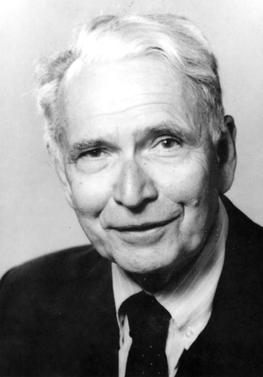 Erwin ChargaffBiochimiste who formulated Chargaff's rules of DNA base composition, a key step toward the double-helix model. · 1905
 Erwin HahnPhysicien qui a découvert the spin echo in nuclear magnetic resonance · 1921
 Esther ConwellPhysicien of electron transport in semiconductors and DNA; National Medal of Science (2009) · 2009
 Esther LederbergMicrobiologiste qui a découvert the lambda phage and developed replica plating. · 1922
 Eugen BambergerChimiste organicien connu pour the Bamberger rearrangement · 1857
 Eugene BraunwaldCardiologue regarded as one of the most influential figures in modern cardiovascular medicine. · 1929
 Eugene DynkinLie algebras and probability; Dynkin diagrams · 1924
 Eugene GuthCofondateur de the statistical theory of rubber elasticity; Bingham Medal (1965) · 1905
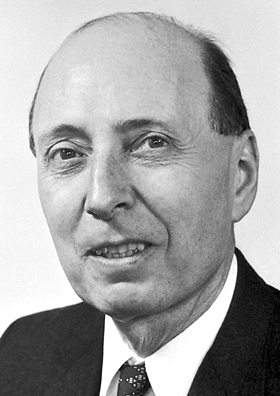 Eugene WignerMathematical physicist; brought group theory and symmetry principles into quantum mechanics, theory of the nuclear force; Prix Nobel de physique 1963 · 1902
 Eugenio CalabiGéométrie différentielle; Calabi-Yau manifolds · 1923
 Eugenio Elia LeviLie algebras; the Levi decomposition · 1883
 Eve MarderNeuroscientifique of neural circuit stability; National Medal of Science (2023) · 2023
 Evelyn WitkinGénéticien qui a découvert the bacterial SOS response and advanced the study of DNA repair. · 1921
 Evgeny LifshitzPhysicien; co-author of the Landau-Lifshitz Course of Theoretical Physics · 1915
 Ezekiel EmanuelOncologue and bioethicist; architecte of health policy who advised U.S. presidents (Affordable Care Act) · 2010
 Fay Ajzenberg-SeloveNuclear physicist and definitive authority on light-nuclei energy levels; National Medal of Science (2007) · 2007
 Federigo EnriquesGéométrie algébrique; classification of algebraic surfaces · 1871
 Felix AuerbachMécanique des milieux continus
 Felix BerezinMathematical physicist; fondateur de supermathematics and Berezin integration · 1931
 Felix BernsteinThéorie des ensembles; the Cantor-Bernstein theorem · 1878
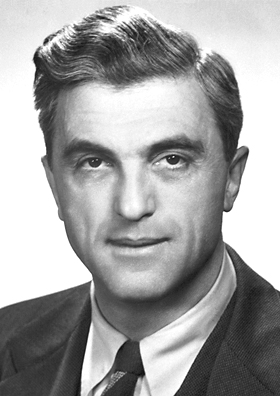 Felix BlochQuantum theory of electrons in crystals and nuclear magnetic induction (NMR); Prix Nobel de physique 1952; first Director-General of CERN · 1905
 Felix BrowderNonlinear functional analysis; monotone operator theory · 1927
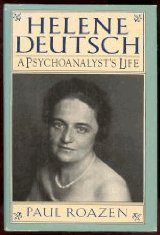 Felix DeutschMédecin who advanced psychosomatic medicine · 1884
 Felix FranklMathématicien, partial differential equations and transonic aerodynamics · 1905
 Felix HausdorffFondateur de modern topology; Hausdorff spaces and dimension · 1868
 Felix PollaczekQueueing theory; the Pollaczek-Khinchine formula · 1892
 Ferdinand CohnBotaniste regarded as a founder of modern bacteriology. · 1828
 Frances Rosenthal KallisonFrances Elaine Rosenthal Kallison was a horsewoman and historian, a cofounder of the Texas Jewish Historical Society, and the only Jewish woman in the National Museum and Cowgirl Hall of Fame. · 1908
 Francis LowPhysicien; quantum field theory and the Low energy theorem · 1921
 Francis SimonPhysicien; low-temperature physics and the third law of thermodynamics · 1893
 François EnglertTheory of the mechanism giving elementary particles mass (Higgs mechanism) · 2013
 François GrosBiologiste moléculaire who co-discovered messenger RNA. · 1925
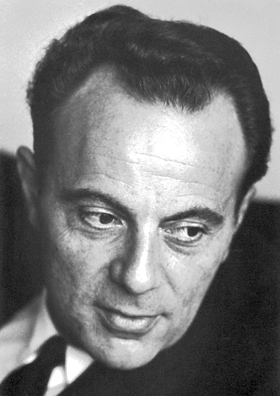 François JacobA reçu le 1965 prix Nobel for discovering the operon model of gene regulation. · 1920
 Frank ColtonChimiste who synthesized the progestin used in the first oral contraceptive pill. · 1923
 Frank HararyA founder of modern graph theory · 1921
 Frank NabarroPhysicien; theory of dislocations and crystal plasticity · 1916
 Frank OppenheimerManhattan Project physicist, blacklisted under McCarthyism, qui a fondé the Exploratorium in San Francisco — the museum that taught the world to touch science. · 1969
 Frank PressGeophysicist and seismologist who served as US presidential science advisor · 1924
 Frank SpitzerThéorie des probabilités; random walks and interacting particle systems · 1926
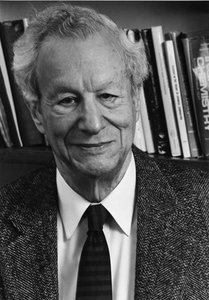 Frank WestheimerChimiste connu pour physical organic and bioorganic chemistry · 1912
 Frank WilczekPhysicien théoricien qui a découvert asymptotic freedom with David Gross and named the axion and anyons; Prix Nobel de physique 2004 · 2004
 Franz SondheimerChimiste organicien connu pour the synthesis of annulenes and natural products · 1926
 Frederic RieszMathématicien