Roy Glauber · Science & Medicine
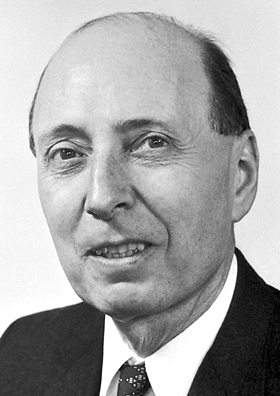
Theoretical physicist whose quantum theory of optical coherence founded quantum optics; Nobel Prize in Physics 2005
1 September 1925, New York City, United States — 26 December 2018, Newton, Massachusetts, United States
New York · Los Alamos · Princeton · Zurich · Pasadena · Cambridge
Roy Glauber is recognized among Jewish contributors to Science & Medicine — Theoretical physicist whose quantum theory of optical coherence founded quantum optics; Nobel Prize in Physics 2005
Origins and early life
Roy Jay Glauber was born in New York City on 1 September 1925, the son of Emanuel Glauber, a travelling salesman, and of Felicia Fox, a trained schoolteacher, and spent his first years on the road with them. The Jewish Virtual Library describes him as a Jewish American theoretical physicist. He built his own reflecting telescope as a boy, graduated in 1941 with the first class of the Bronx High School of Science and entered Harvard at sixteen on a scholarship.
Work and career
In October 1943, at eighteen, he was recruited to Los Alamos, where he spent two years in the Theory Division of the Manhattan Project calculating the critical mass of the bomb, and in July 1945 he saw the flash of the Trinity test from over a hundred miles away. Back at Harvard, he took his bachelor's degree in 1946 and his doctorate in 1949, worked at the Institute for Advanced Study in Princeton and with Wolfgang Pauli in Zurich, replaced Richard Feynman for a year at Caltech, and returned to Harvard in 1952.
In 1963 he published the quantum theory of optical coherence, which explained the fundamental difference between the light of hot sources such as bulbs and that of lasers, and laid the foundation of quantum optics. He also devised a theory of high-energy collisions modelled on optical diffraction, still used for collisions of heavy nuclei, and first defined the stochastic dynamics of the Ising model.
Recognition
In 2005 he received one half of the Nobel Prize in Physics for his contribution to the quantum theory of optical coherence, the other half going to John Hall and Theodor Hänsch for laser-based precision spectroscopy. For years he was the keeper of the broom at the Ig Nobel ceremony, sweeping paper planes off the stage, and he taught for more than sixty-five years. He died in Newton, Massachusetts, on 26 December 2018, aged ninety-three, one of the last surviving witnesses of the Trinity test.
Verify and go deeper with these external references.
Source: Wikipedia — Roy Glauber
This page is published in seven languages from an English source. The translations are reviewed, but a mistake can still slip through. If you spot one on this profile — a wrong word, a lost date, a sentence that says something the English does not — please tell us.
Theoretical physicist whose quantum theory of optical coherence founded quantum optics; Nobel Prize in Physics 2005
Source: Wikipedia — Roy Glauber
Similar Contributors

Lev Landau
Eugene Wigner

Niels Bohr

Rudolph Marcus

Albert Einstein
