Albert Einstein · Science & Medicine
Physicist who founded special and general relativity and explained the photoelectric effect; Nobel Prize in Physics 1921
14 March 1879, Ulm, Kingdom of Württemberg, German Empire — 18 April 1955, Princeton, New Jersey, United States
Munich · Zurich · Bern · Berlin · Princeton
Albert Einstein was a German-born theoretical physicist who developed the theory of relativity, one of the two pillars of modern physics.
Origins and early life
Albert Einstein was born in Ulm, in the Kingdom of Württemberg, on 14 March 1879, the son of Hermann Einstein, a salesman and engineer, and of Pauline Koch, and grew up in Munich, where his father and his uncle Jakob founded an electrical equipment company. His parents were secular Ashkenazi Jews, he first went to a Catholic elementary school in Munich, and though he held to no religion, he wrote in 1954 of the Jewish people as one to whom he gladly belonged.
Work and career
He trained as a teacher of mathematics and physics at the federal polytechnic school in Zurich, graduating in 1900, became a Swiss citizen in 1901 and found a post at the Patent Office in Bern. In 1905 he published four papers, on the light quantum and the photoelectric effect, on Brownian motion, on special relativity and on the equivalence of mass and energy, which changed views of space, time and matter. After chairs in Zurich and Prague he moved to Berlin in 1914, and by the autumn of 1915 he had completed the general theory of relativity, whose bending of starlight by the Sun was confirmed during the eclipse of 29 May 1919.
Recognition
He received the Nobel Prize in Physics for 1921, alone and a year late, in 1922, for his services to Theoretical Physics, and especially for his discovery of the law of the photoelectric effect. He helped Chaim Weizmann raise funds for the Hebrew University of Jerusalem, of which he was a figurehead founder when it opened in 1925, and to which he left his papers and literary estate. In 1933, unable to return to Nazi Germany, he renounced his German citizenship, asked British leaders, Winston Churchill among them, to help bring Jewish scientists out of Germany, and in October settled at the Institute for Advanced Study in Princeton.
He became an American citizen in 1940 and died in Princeton on 18 April 1955, at the age of seventy-six, having worked almost to the end.
Verify and go deeper with these external references.
Source: Wikipedia — Albert Einstein
This page is published in seven languages from an English source. The translations are reviewed, but a mistake can still slip through. If you spot one on this profile — a wrong word, a lost date, a sentence that says something the English does not — please tell us.
Notable Works
Physicist who founded special and general relativity and explained the photoelectric effect; Nobel Prize in Physics 1921
Source: Wikipedia — Albert Einstein
Similar Contributors

Roger Penrose

Brian Josephson
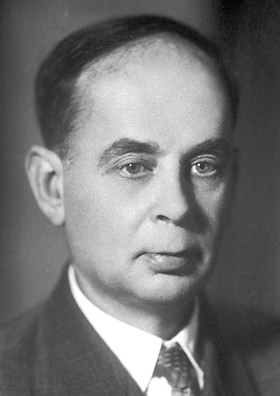
Ilya Frank

Lev Landau

Niels Bohr