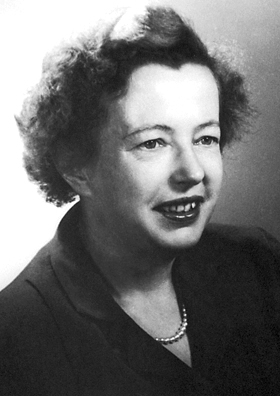
Wolfgang Pauli · Science & Medicine
Theoretical physicist who formulated the exclusion principle and proposed the neutrino; Nobel Prize in Physics 1945
25 April 1900, Vienna, Austria — 15 December 1958, Zurich, Switzerland
Vienna · Munich · Hamburg · Zurich · Princeton
Wolfgang Pauli is recognized among Jewish contributors to Science & Medicine — Theoretical physicist who formulated the exclusion principle and proposed the neutrino; Nobel Prize in Physics 1945
Origins and early life
Wolfgang Ernst Pauli was born in Vienna on 25 April 1900, the son of Wolfgang Joseph Pauli, a biochemist born in Prague, and of Bertha Schütz, and the physicist Ernst Mach was his godfather. His father, a grandson of the Jewish publisher Wolf Pascheles, had been born Jewish under the name Pascheles and became a Roman Catholic in 1899, his mother's father was the Jewish writer Friedrich Schütz, and Wolfgang was raised a Catholic, later belonging to no church.
Under Arnold Sommerfeld in Munich he took his doctorate in 1921 and wrote a 237-page review of relativity theory that Einstein praised and published as a book.
Work and career
After a winter as Max Born's assistant in Göttingen and a year with Niels Bohr in Copenhagen, he became a lecturer at the University of Hamburg in 1923. There he arrived at the exclusion principle, published in 1925: no two electrons in an atom can share the same set of quantum numbers, the rule that explains how electrons fill their shells and how the periodic table is built. Appointed professor of theoretical physics at the ETH in Zurich in 1928, he proposed in a letter of 4 December 1930 a light neutral particle to save the conservation of energy in beta decay, the neutrino, first detected in 1956.
In July 1940, the annexation of Austria having made him a German citizen, he and his wife left Europe for the Institute for Advanced Study in Princeton, a departure the CERN archive attributes to his Jewish descent.
Recognition
It was there, in November 1945, that he learned he had been awarded the Nobel Prize in Physics, alone, for the discovery of the Exclusion Principle, also called the Pauli Principle.
Later years
He became an American citizen in 1946, went back that year to his chair in Zurich, became a Swiss citizen in 1949, and died at the Red Cross Hospital in Zurich on 15 December 1958, at the age of fifty-eight.
Verify and go deeper with these external references.
Source: Wikipedia — Wolfgang Pauli
This page is published in seven languages from an English source. The translations are reviewed, but a mistake can still slip through. If you spot one on this profile — a wrong word, a lost date, a sentence that says something the English does not — please tell us.
Theoretical physicist who formulated the exclusion principle and proposed the neutrino; Nobel Prize in Physics 1945
Source: Wikipedia — Wolfgang Pauli
Similar Contributors

Lev Landau

Niels Bohr

Arthur Schawlow

Leon Cooper

Leon Lederman