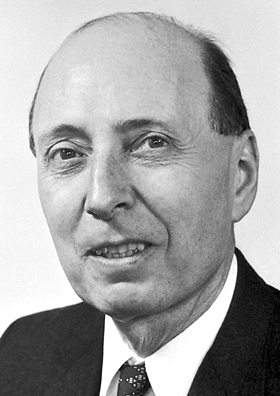
Leon Cooper · Science & Medicine
Physicist who proposed the electron pairs now called Cooper pairs and co-authored the BCS theory of superconductivity, then modelled learning in the brain; Nobel Prize in Physics 1972
28 February 1930, The Bronx, New York City, United States — 23 October 2024, Providence, Rhode Island, United States
New York · Princeton · Urbana · Providence
Leon Cooper is recognized among Jewish contributors to Science & Medicine — Physicist who proposed the electron pairs now called Cooper pairs and co-authored the BCS theory of superconductivity, then modelled learning in the brain; Nobel Prize in Physics 1972
Origins and early life
Leon Cooper was born Leon Kupchik in the Bronx, New York City, on 28 February 1930, the son of Jewish immigrants from Belarus and Poland.
Work and career
His mother, Anna Zola, died when he was seven, and he and his sister spent part of their childhood in care; his father, Irving, later remarried and changed the family name to Cooper. He graduated from the Bronx High School of Science in 1947 and studied physics at Columbia University, where he took his doctorate in 1954. After a year at the Institute for Advanced Study in Princeton, he joined John Bardeen at the University of Illinois to work on superconductivity, the loss of all electrical resistance that certain metals show at very low temperatures, observed since 1911 but still unexplained.
In 1956 he showed that, in such a metal, electrons can bind into pairs, now called Cooper pairs, and in 1957 he, Bardeen and Robert Schrieffer published the theory known by their initials as BCS. He joined Brown University in Providence in 1958 and taught there for more than five decades, until 2014. In 1972 he shared the Nobel Prize in Physics with John Bardeen and Robert Schrieffer, for their jointly developed theory of superconductivity, usually called the BCS theory.
He then turned to the brain, becoming in 1973 the founding director of Brown's Center for Neural Science, and in 1982 he published with his doctoral students Elie Bienenstock and Paul Munro the BCM theory, one of the first mathematical models of how changes in synapses can give rise to some forms of learning and memory. In 1975 he co-founded with his colleague Charles Elbaum the company Nestor, which sought commercial uses for artificial neural networks. He died at his home in Providence, Rhode Island, on 23 October 2024, at the age of ninety-four.
Verify and go deeper with these external references.
Source: Wikipedia — Leon Cooper
This page is published in seven languages from an English source. The translations are reviewed, but a mistake can still slip through. If you spot one on this profile — a wrong word, a lost date, a sentence that says something the English does not — please tell us.
Physicist who proposed the electron pairs now called Cooper pairs and co-authored the BCS theory of superconductivity, then modelled learning in the brain; Nobel Prize in Physics 1972
Source: Wikipedia — Leon Cooper
Similar Contributors
Eugene Wigner

Lev Landau

Vitaly Ginzburg

Alexei Abrikosov

Arthur Schawlow
