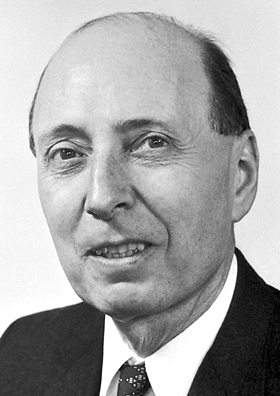
Vitaly Ginzburg · Science & Medicine
Physicist; Ginzburg-Landau theory of superconductivity (1950), Nobel Prize in Physics 2003
4 October 1916, Moscow, Russian Empire — 8 November 2009, Moscow, Russia
Moscow · Kazan
Vitaly Ginzburg is recognized among Jewish contributors to Science & Medicine — Physicist; Ginzburg-Landau theory of superconductivity (1950), Nobel Prize in Physics 2003
Origins and early life
Vitaly Lazarevich Ginzburg was born in Moscow on 4 October 1916, the only child of Lazar Ginzburg, an engineer in water purification, and of Avgusta Vildauer-Ginzburg, a doctor, who died of typhoid in 1920. He was born into a Jewish family, and in his Nobel autobiography he called himself an atheist and, in his own words, a bearer of the Jewish national feeling, recalling the state antisemitism that flourished in the Soviet Union after the war.
Sent to school only at eleven, he crammed three school years into three months and studied at Moscow State University from 1933, and in 1938 he left experimental optics for theoretical physics under Igor Tamm.
Work and career
He joined the Lebedev Physical Institute in September 1940, remained there ever after, and defended his doctoral thesis in 1942 in Kazan, where the institute had been evacuated. In 1947, on his birthday, a national newspaper attacked him in the campaign against so-called cosmopolitans; by his own account he was saved in 1948 by joining Tamm's group on the hydrogen bomb, where his proposal of lithium-6 as fuel became one of the two key ideas.
In 1950, with Lev Landau, he formulated the Ginzburg–Landau theory, which describes the interplay of superconductivity and magnetism through a single mathematical function and later proved broad enough to explain the type-II superconductors used in medical scanners.
Recognition
Elected a corresponding member of the Academy of Sciences in 1953 and a full member in 1966, he headed the Tamm department of theoretical physics from 1971 to 1988 and edited the journal Physics-Uspekhi from 1998. In 2003 he shared the Nobel Prize in Physics with Alexei Abrikosov and Anthony Leggett for pioneering contributions to the theory of superconductors and superfluids. He died in Moscow on 8 November 2009, at ninety-three, and was buried in the Novodevichy Cemetery.
Verify and go deeper with these external references.
Source: Wikipedia — Vitaly Ginzburg
This page is published in seven languages from an English source. The translations are reviewed, but a mistake can still slip through. If you spot one on this profile — a wrong word, a lost date, a sentence that says something the English does not — please tell us.
Physicist; Ginzburg-Landau theory of superconductivity (1950), Nobel Prize in Physics 2003
Source: Wikipedia — Vitaly Ginzburg
Similar Contributors

Alexei Abrikosov
Eugene Wigner

Leon Cooper

Lev Landau

K. Alexander Müller
