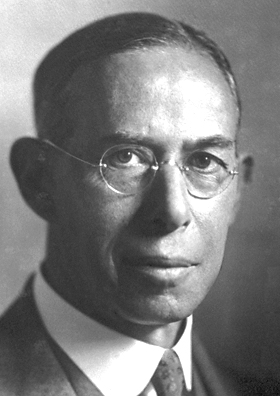
Paul Greengard · Science & Medicine
Showed how dopamine and other transmitters act on nerve cells through protein phosphorylation, the basis of slow synaptic transmission; Nobel Prize in Physiology or Medicine 2000
11 December 1925, New York City, New York, United States — 13 April 2019, New York City, New York, United States
New York · Baltimore · London · New Haven
Paul Greengard is recognized among Jewish contributors to Science & Medicine — Showed how dopamine and other transmitters act on nerve cells through protein phosphorylation, the basis of slow synaptic transmission; Nobel Prize in Physiology or Medicine 2000
Origins and early life
Paul Greengard was born in New York City on 11 December 1925, and his mother, Pearl Meister, died giving birth to him; his father, Benjamin Greengard, had found success in vaudeville as a singer, dancer and comedian before going into the cosmetics trade.
Work and career
In his Nobel autobiography he wrote that his mother had been Jewish, but that his father remarried when he was thirteen months old and that from then on his Episcopalian stepmother brought him up in the Christian tradition, celebrating Easter and Christmas. After three years in the navy as an electronics technician, on an early-warning system against kamikaze planes at the Massachusetts Institute of Technology, he graduated in mathematics and physics from Hamilton College in 1948.
He turned to biophysics, earned his doctorate at Johns Hopkins University in 1953, and spent postdoctoral years in London, Cambridge and Amsterdam combining biochemistry with the study of nerve function. After heading biochemistry at the Geigy Research Laboratories, he left industry in 1967 and, after a year as a visiting professor, joined Yale University as a professor of pharmacology. He showed that when dopamine reaches its receptor it raises cyclic AMP inside the nerve cell, activating an enzyme that adds phosphate groups to key proteins, a slow synaptic transmission that shapes alertness and mood.
He also showed the role of DARPP-32, a regulatory protein that directs many others like a conductor, and in 1983 he moved to the Rockefeller University. In 2000 he shared the Nobel Prize in Physiology or Medicine with Arvid Carlsson and Eric Kandel, “for their discoveries concerning signal transduction in the nervous system”.
Later years
He gave his whole share of the prize money to found the Pearl Meister Greengard Prize for women in biomedical research, named for his mother and first awarded in 2004, and he died in New York on 13 April 2019, aged 93.
Verify and go deeper with these external references.
Source: Wikipedia — Paul Greengard / NobelPrize.org Medicine 2000
This page is published in seven languages from an English source. The translations are reviewed, but a mistake can still slip through. If you spot one on this profile — a wrong word, a lost date, a sentence that says something the English does not — please tell us.
Showed how dopamine and other transmitters act on nerve cells through protein phosphorylation, the basis of slow synaptic transmission; Nobel Prize in Physiology or Medicine 2000
Source: Wikipedia — Paul Greengard / NobelPrize.org Medicine 2000
Similar Contributors
Joseph Erlanger

Bernard Katz

Gary Ruvkun

James Rothman

Joseph Goldstein
