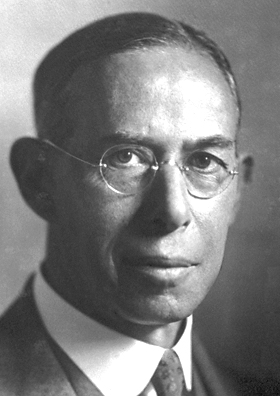
Julius Axelrod · Science & Medicine
Showed that nerve endings take back the noradrenaline they release (reuptake) and discovered the enzyme COMT; Nobel Prize in Physiology or Medicine 1970
30 May 1912, New York City, New York, United States — 29 December 2004, Rockville, Maryland, United States
New York · Bethesda
Julius Axelrod is recognized among Jewish contributors to Science & Medicine — Showed that nerve endings take back the noradrenaline they release (reuptake) and discovered the enzyme COMT; Nobel Prize in Physiology or Medicine 1970
Origins and early life
Julius Axelrod was born on 30 May 1912 on the Lower East Side of Manhattan, the son of Isadore and Molly Axelrod, who had come from Polish Galicia; his father was a basket maker. The family was not religious, but his parents belonged to the East European Jewish immigrant world, and the boy spoke Yiddish and went to religious school every afternoon after public school. He graduated from the City College of New York in 1933, was turned down by every medical school he applied to, partly because of Jewish quotas, and from 1935 tested vitamin supplements in a city laboratory.
Work and career
In 1946 the biochemist Bernard Brodie took him into his laboratory, where Axelrod showed that the painkiller acetanilide acts mainly through the compound later sold as acetaminophen, which neither man thought of patenting. Brodie brought him to the National Institutes of Health in 1949, and in 1955, at forty-two, Axelrod earned his doctorate and became head of the pharmacology section at the National Institute of Mental Health.
There, in 1957, he found the enzyme catechol-O-methyltransferase, which breaks down adrenaline, and in 1961 showed with radioactive noradrenaline that nerve endings take back the transmitter they release, which ends its signal. He showed that cocaine and tricyclic antidepressants block this reuptake, which still explains how those antidepressants act, and with Richard Wurtman established that melatonin is the active hormone of the pineal gland.
Recognition
The 1970 Nobel Prize in Physiology or Medicine was shared by Bernard Katz, Ulf von Euler and Axelrod “for their discoveries concerning the humoral transmitters in the nerve terminals and the mechanism for their storage, release and inactivation”.
Later years
Married in 1938 to Sally Taub and widowed in 1992, he still went to his office at the National Institutes of Health until he died at Rockville, Maryland, on 29 December 2004, aged 92.
Verify and go deeper with these external references.
Source: Wikipedia — Julius Axelrod / NobelPrize.org Medicine 1970
This page is published in seven languages from an English source. The translations are reviewed, but a mistake can still slip through. If you spot one on this profile — a wrong word, a lost date, a sentence that says something the English does not — please tell us.
Showed that nerve endings take back the noradrenaline they release (reuptake) and discovered the enzyme COMT; Nobel Prize in Physiology or Medicine 1970
Source: Wikipedia — Julius Axelrod / NobelPrize.org Medicine 1970
Similar Contributors

Bernard Katz

David Baltimore
Joseph Erlanger

Gary Ruvkun

Howard Temin
