Michael Rosbash · Science & Medicine
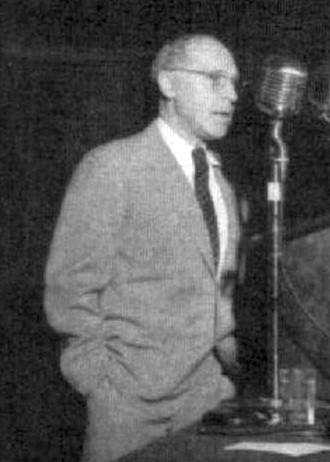
Geneticist who with Jeffrey Hall isolated the period gene and showed how its protein drives the feedback loop of the circadian clock; Nobel Prize in Physiology or Medicine 2017
7 March 1944, Kansas City, Missouri, United States
Kansas City · Boston · Pasadena · Paris · Edinburgh · Waltham
Michael Rosbash is recognized among Jewish contributors to Science & Medicine — Geneticist who with Jeffrey Hall isolated the period gene and showed how its protein drives the feedback loop of the circadian clock; Nobel Prize in Physiology or Medicine 2017
Origins and early life
Michael Morris Rosbash was born in Kansas City, Missouri, on 7 March 1944, the son of Alfred Rosbash, from Baden-Baden, and of Hilda Sonntag, from Berlin, German Jews whose studies of law and medicine ended when the Nazis shut those careers to Jews. His parents left for the United States in 1938, a few months before Kristallnacht, after his father, by then a cantor, had sung for a year in a Breslau synagogue, and in Kansas City he found a post with a Reform congregation.
The family moved to Boston in 1946, where he grew up, and in the autumn of 1954 his father, aged forty-two, suffered a fatal heart attack in the synagogue on the eve of Yom Kippur, shortly after singing Kol Nidre; Rosbash, a devout atheist in his own words, feels what he calls an irrational connection to that event and to his family history.
Work and career
He graduated in chemistry from Caltech in 1965, spent a year in Paris as a Fulbright scholar, took a doctorate in biophysics at MIT in 1970 and, after three years in Edinburgh, joined Brandeis University near Boston in 1974. Working there with Jeffrey Hall on fruit flies, he isolated in 1984 the period gene that governs the daily rhythm, as Michael Young did in New York, and the two Brandeis scientists found that its protein, PER, builds up in the cell at night and is broken down by day.
In 1990 they proposed that PER blocks the activity of its own gene, a feedback loop by which the protein regulates its own level in a cycle of about twenty-four hours, a principle now known to hold in humans too.
Recognition
In 2017 he shared the Nobel Prize in Physiology or Medicine with Hall and Young, for their discoveries of molecular mechanisms controlling the circadian rhythm, the clock that fits sleep, hormones and metabolism to the hours of the day. His mother, who used to ask his wife whether he would win the big one, had died in 2008 at ninety-four, nine years too early to see it.
Verify and go deeper with these external references.
Source: Wikipedia — Michael Rosbash
This page is published in seven languages from an English source. The translations are reviewed, but a mistake can still slip through. If you spot one on this profile — a wrong word, a lost date, a sentence that says something the English does not — please tell us.
Geneticist who with Jeffrey Hall isolated the period gene and showed how its protein drives the feedback loop of the circadian clock; Nobel Prize in Physiology or Medicine 2017
Source: Wikipedia — Michael Rosbash
Similar Contributors

Gary Ruvkun

Paul Greengard
Hermann Muller

Bernard Katz

Ernst Boris Chain
