George Olah · Science & Medicine
Chemist who used superacids to make fleeting carbocations stable enough to study; Nobel Prize in Chemistry 1994
22 May 1927, Budapest, Hungary — 8 March 2017, Beverly Hills, California, United States
Budapest · London · Sarnia · Cleveland · Los Angeles
George Olah is recognized among Jewish contributors to Science & Medicine — Chemist who used superacids to make fleeting carbocations stable enough to study; Nobel Prize in Chemistry 1994
Origins and early life
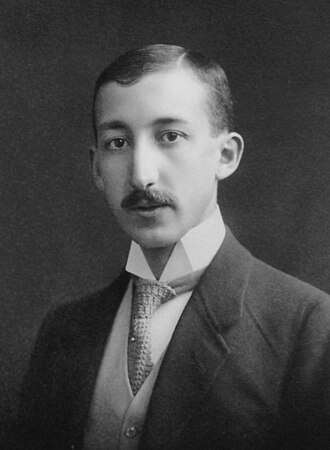
George Olah was born Oláh András György in Budapest on 22 May 1927, to a Jewish couple, Magda Krasznai and Gyula Oláh, a lawyer.
Work and career
He was educated by the Piarist Fathers, a Roman Catholic teaching order, and as racial laws of growing severity closed in he spent the last months of the war hiding in Budapest, among the young people sheltered by the Lutheran pastor Gábor Sztehlo. His brother Peter, three years older and also a pupil of the Piarists, did not survive the war. He studied chemical engineering at the Technical University of Budapest under Géza Zemplén, married Judit Lengyel in 1949, taught organic chemistry there until 1954 and then led a small group at the chemical research institute of the Hungarian Academy of Sciences.
After Soviet tanks crushed the revolution of 1956 he fled with his family, reached London in December and in the spring of 1957 went on to Canada, where Dow Chemical took him on at its laboratory in Sarnia, Ontario. It was there, from the end of the 1950s, that he began his work on stable carbocations, and in the early 1960s he showed that superacids, far stronger than sulphuric acid, could keep these fleeting, positively charged carbon ions alive long enough to be studied.
He returned to university life in 1965 at Case Western Reserve in Cleveland, became an American citizen in 1971 and in 1977 moved to the University of Southern California.
Recognition
In 1994 he received the Nobel Prize in Chemistry alone, for his contribution to carbocation chemistry, work that also led to new ways of turning straight-chain hydrocarbons into high-octane fuels.
Later years
In his later years he championed what he called the methanol economy, and he died at his home in Beverly Hills on 8 March 2017, at eighty-nine; as he had wished, he was laid to rest in Budapest.
Verify and go deeper with these external references.
Source: Wikipedia — George Olah
This page is published in seven languages from an English source. The translations are reviewed, but a mistake can still slip through. If you spot one on this profile — a wrong word, a lost date, a sentence that says something the English does not — please tell us.
Chemist who used superacids to make fleeting carbocations stable enough to study; Nobel Prize in Chemistry 1994
Source: Wikipedia — George Olah
Similar Contributors

Herbert Brown

Alan Heeger
George de Hevesy

Richard Willstätter

Rudolph Marcus
