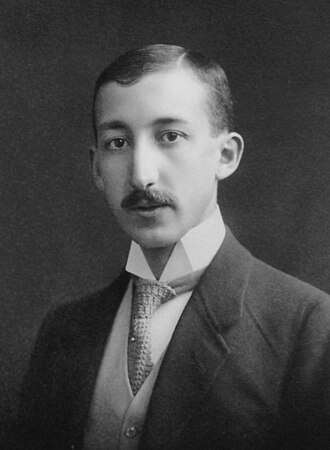
Herbert Brown · Science & Medicine
Chemist who found how to make sodium borohydride and developed hydroboration, turning boron compounds into important reagents of organic synthesis; Nobel Prize in Chemistry 1979
22 May 1912, London, England, United Kingdom — 19 December 2004, Lafayette, Indiana, United States
London · Chicago · Detroit · West Lafayette
Herbert Brown is recognized among Jewish contributors to Science & Medicine — Chemist who found how to make sodium borohydride and developed hydroboration, turning boron compounds into important reagents of organic synthesis; Nobel Prize in Chemistry 1979
Origins and early life
Herbert Charles Brown was born Herbert Brovarnik in London on 22 May 1912, the son of Charles Brovarnik and Pearl Gorinstein, both born in Zhitomir, in Ukraine, who had come to London in 1908, as he later wrote, as part of the vast Jewish immigration of those years. In June 1914 the family joined his father's parents in Chicago, where the name had become Brown, and he grew up above his father's small hardware store.
Work and career
His father died in 1926 and the boy left school to keep the shop, but his mother sent him back, and he graduated from Englewood High School in 1930. After Crane Junior College closed in 1933 he met Sarah Baylen in a former teacher's laboratory, and in 1935 they graduated together from Wright Junior College, in a yearbook where she predicted he would win the Nobel Prize. At the University of Chicago he finished his degree in 1936, married Sarah on 6 February 1937 and took his doctorate in 1938 under Hermann Irving Schlesinger, drawn to the hydrides of boron by a book she had given him.
During the Second World War, with Schlesinger, he found how to make sodium borohydride, and at Purdue University, which he joined in 1947, he built on it a full spectrum of reducing agents, from mild to powerful. In the late nineteen-fifties his laboratory found that boron hydrides add across the double bonds of alkenes, a reaction called hydroboration, and the organoboranes it yields became versatile tools for building carbon compounds, used to make medicines.
Recognition
In 1979 he shared the Nobel Prize in Chemistry with Georg Wittig, for their development of the use of boron- and phosphorus-containing compounds, respectively, into important reagents in organic synthesis. Emeritus from 1978, he kept working with a large group of postdoctoral researchers, and he died in Lafayette, Indiana, on 19 December 2004, at the age of ninety-two.
Verify and go deeper with these external references.
Source: Wikipedia — Herbert Brown / NobelPrize.org Chemistry 1979
This page is published in seven languages from an English source. The translations are reviewed, but a mistake can still slip through. If you spot one on this profile — a wrong word, a lost date, a sentence that says something the English does not — please tell us.
Chemist who found how to make sodium borohydride and developed hydroboration, turning boron compounds into important reagents of organic synthesis; Nobel Prize in Chemistry 1979
Source: Wikipedia — Herbert Brown / NobelPrize.org Chemistry 1979