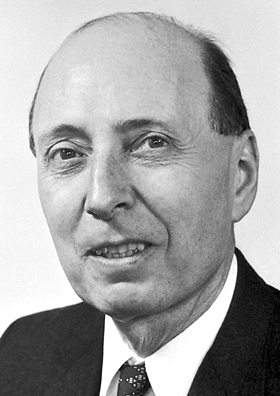
Elie Metchnikoff · Science & Medicine
Discovered phagocytosis and cellular immunity; Nobel 1908 (NOT the inventor of yogurt; he popularized the probiotic/lactic-acid longevity theory)
1845, Ivanivka, near Kharkiv, Russian Empire (now Ukraine) — 1916, Paris, France
Russian Empire · Italy · France
Elie Metchnikoff is recognized among Jewish contributors to Science & Medicine — Discovered phagocytosis and cellular immunity; Nobel 1908 (NOT the inventor of yogurt; he popularized the probiotic/lactic-acid longevity theory)
Origins and early life
Elie Metchnikoff was born on 15 May 1845 in the village of Ivanovka, in the Kharkov Governorate of the Russian Empire, the youngest of five children of an officer of the Imperial Guard descended from Moldavian nobility. His mother, Emilia Nevakhovich, came from a Jewish family — she was a daughter of the writer Leo Nevakhovich, and it was she who turned him towards natural science rather than medicine; he was baptised Russian Orthodox and later became an atheist.
He finished a four-year degree at Kharkov in two, worked in Germany and Italy on the embryos of worms and cuttlefish, took his doctorate at Saint Petersburg in 1867, and was made a professor at Odessa while still in his twenties.
Work and career
In 1882 political turmoil drove him out of the university, and he set up a private laboratory at Messina in Sicily. There he pushed small citrus thorns into transparent starfish larvae and found strange mobile cells gathering around them, as though besieging an intruder; the Viennese zoologist Carl Claus gave the cells their name, phagocytes, and Metchnikoff presented the finding at Odessa in 1883. The idea that white blood cells devour invading microbes met scepticism from Pasteur and Behring, and it took twenty-five years and the support of Rudolf Virchow before it was accepted as the cellular half of immunity.
From 1888 he worked at the Pasteur Institute in Paris for the rest of his life, coined the word gerontology, and argued that lactic-acid bacteria in the gut could lengthen life — the ancestor of the modern idea of probiotics. He shared the 1908 Nobel Prize in Physiology or Medicine with Paul Ehrlich, and died in Paris on 15 July 1916.
Verify and go deeper with these external references.
Source: Nobelprize.org; Wikipedia (mother of Jewish descent)
This page is published in seven languages from an English source. The translations are reviewed, but a mistake can still slip through. If you spot one on this profile — a wrong word, a lost date, a sentence that says something the English does not — please tell us.
Discovered phagocytosis and cellular immunity; Nobel 1908 (NOT the inventor of yogurt; he popularized the probiotic/lactic-acid longevity theory)
Source: Nobelprize.org; Wikipedia (mother of Jewish descent)
Similar Contributors
Eugene Wigner

Otto Meyerhof

Ralph Steinman

Rudolph Marcus

Saharon Shelah
