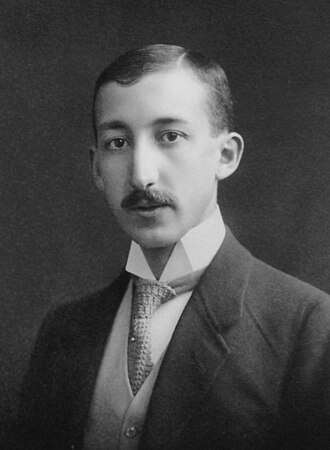
Roger Kornberg · Science & Medicine
Biochemist who identified the nucleosome and captured the transcription machinery of eukaryotic cells in atomic detail; Nobel Prize in Chemistry 2006
24 April 1947, St. Louis, Missouri, United States
St. Louis · Cambridge · Stanford · Jerusalem
Roger Kornberg is recognized among Jewish contributors to Science & Medicine — Biochemist who identified the nucleosome and captured the transcription machinery of eukaryotic cells in atomic detail; Nobel Prize in Chemistry 2006
Origins and early life
Roger David Kornberg was born in St Louis, Missouri, on 24 April 1947, into a Jewish family, the eldest son of the biochemists Sylvy and Arthur Kornberg; his father's parents were Jewish immigrants from Austrian Galicia.
Work and career
At twelve he travelled to Stockholm to see his father receive the Nobel Prize in Physiology or Medicine for 1959, awarded for showing how genetic information passes from one DNA molecule to another. He studied chemistry at Harvard, graduating in 1967, and took his doctorate in chemical physics at Stanford in 1972, showing that lipids move fast within a membrane but cross from one face of it to the other only very slowly.
With Aaron Klug in Cambridge he proposed in 1974 the structure now called the nucleosome, some two hundred base pairs of DNA wrapped around eight histone proteins, the basic unit in which DNA is packed in the nucleus. Back in the United States, at Harvard Medical School in 1976 and at Stanford from 1978, he worked with Yahli Lorch, an Israeli scientist who became his partner in research and in life, and in 1987 they showed that a nucleosome on a promoter stops transcription from starting.
His group built a transcription system from baker's yeast, discovered Mediator, the complex that relays regulatory signals to the polymerase, and spent two decades on the methods that solved the atomic structure of RNA polymerase II.
Recognition
In 2006 he received the Nobel Prize in Chemistry alone, for his studies of the molecular basis of eukaryotic transcription, crystal pictures of the machinery in full action so detailed that individual atoms can be told apart. It was the sixth Nobel Prize to go to the son of an earlier laureate, and by then he had been a visiting professor at the Hebrew University of Jerusalem for twenty years, spending almost half of each year in Jerusalem.
Verify and go deeper with these external references.
Source: Wikipedia — Roger Kornberg
This page is published in seven languages from an English source. The translations are reviewed, but a mistake can still slip through. If you spot one on this profile — a wrong word, a lost date, a sentence that says something the English does not — please tell us.
Biochemist who identified the nucleosome and captured the transcription machinery of eukaryotic cells in atomic detail; Nobel Prize in Chemistry 2006
Source: Wikipedia — Roger Kornberg