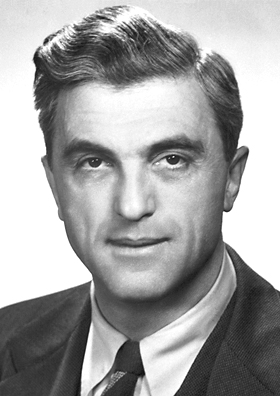
Otto Stern · Science & Medicine
Molecular beam method, the Stern–Gerlach experiment and the discovery of the magnetic moment of the proton; Nobel Prize in Physics 1943
17 February 1888, Sohrau, Upper Silesia, Germany (now Żory, Poland) — 17 August 1969, Berkeley, California, United States
Breslau · Prague · Zurich · Frankfurt · Hamburg · Pittsburgh · Berkeley
Otto Stern is recognized among Jewish contributors to Science & Medicine — Molecular beam method, the Stern–Gerlach experiment and the discovery of the magnetic moment of the proton; Nobel Prize in Physics 1943
Origins and early life
Otto Stern was born on 17 February 1888 in Sohrau, in Upper Silesia, now Żory in Poland, and grew up in Breslau, where his family moved in 1892 and where he attended the Johannes Gymnasium. He was the eldest child of Oskar Stern, a well-to-do Jewish miller and grain dealer in Upper Silesia, and of his wife, Eugenie Rosenthal. After a doctorate in physical chemistry at Breslau in 1912, he became Albert Einstein's first postdoctoral collaborator, in Prague and then in Zurich, and from 1914 he taught theoretical physics at Frankfurt, apart from wartime service as a meteorologist.
Work and career
In 1922, in Frankfurt, he and Walther Gerlach sent a beam of silver atoms through a magnetic field and saw it split in two, proving that the orientation of atoms in space is quantized. Professor of physical chemistry at Hamburg from 1923, he built a molecular beam laboratory there that showed the wave nature of atoms and, in 1933, measured the magnetic moment of the proton, far larger than theory had predicted. When his Jewish co-workers were dismissed in June 1933, Stern, exempt as a veteran of the First World War, resigned a few days later, and he left for the United States as research professor at the Carnegie Institute of Technology in Pittsburgh.
Recognition
After more than eighty nominations, he received the Nobel Prize in Physics for 1943, unshared, for his contribution to the development of the molecular ray method and his discovery of the magnetic moment of the proton. Because of the war it was presented to him in New York on 10 December 1944, at the Waldorf Astoria, together with the prize for 1944 awarded to Isidor Rabi, who had worked in his Hamburg laboratory. He retired to Berkeley in 1945, never again made an official visit to Germany, and died there on 17 August 1969, at the age of eighty-one.
Verify and go deeper with these external references.
Source: Wikipedia — Otto Stern
This page is published in seven languages from an English source. The translations are reviewed, but a mistake can still slip through. If you spot one on this profile — a wrong word, a lost date, a sentence that says something the English does not — please tell us.
Molecular beam method, the Stern–Gerlach experiment and the discovery of the magnetic moment of the proton; Nobel Prize in Physics 1943
Source: Wikipedia — Otto Stern
Similar Contributors

Isidor Rabi

Albert Michelson

Daniel Nathans
Felix Bloch

James Franck
