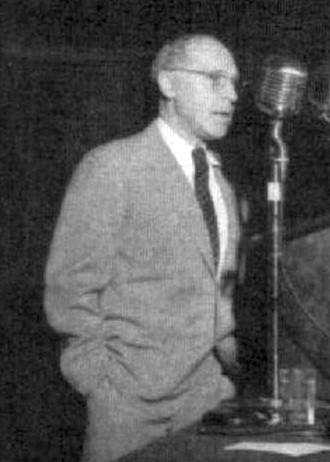
Daniel Nathans · Science & Medicine
Used restriction enzymes to cut the DNA of the tumour virus SV40 into defined fragments and map it, founding a basic method of molecular biology; Nobel Prize in Physiology or Medicine 1978
30 October 1928, Wilmington, Delaware, United States — 16 November 1999, Baltimore, Maryland, United States
Wilmington · Saint Louis · New York · Bethesda · Rehovot · Baltimore
Daniel Nathans is recognized among Jewish contributors to Science & Medicine — Used restriction enzymes to cut the DNA of the tumour virus SV40 into defined fragments and map it, founding a basic method of molecular biology; Nobel Prize in Physiology or Medicine 1978
Origins and early life
Daniel Nathans was born in Wilmington, Delaware, on 30 October 1928, the last of the nine children of Samuel and Sarah Nathans, Russian Jewish immigrants, his father having broken away from an orthodox family in his teens.
Work and career
His father lost his small business in the Depression, and the boy worked after school from about the age of ten before graduating in chemistry from the University of Delaware in 1950. He took his medical degree at Washington University in Saint Louis in 1954, then trained at the Columbia-Presbyterian Medical Center in New York and at the National Institutes of Health in Bethesda. In 1959 he moved to Fritz Lipmann's laboratory at the Rockefeller Institute to study how cells build proteins, and in 1962 he joined the Johns Hopkins University School of Medicine in Baltimore, where he stayed for the rest of his career.
In 1969 he spent six months at the Weizmann Institute of Science in Rehovot, Israel, learning about the tumour virus SV40, when a letter from his colleague Hamilton Smith told him of an enzyme that cut DNA at precise points. Back in Baltimore, he and his student Kathleen Danna used such restriction enzymes to cut the DNA of SV40 into eleven specific fragments and map them, a method that soon became a basic tool of molecular biology.
Recognition
The 1978 Nobel Prize in Physiology or Medicine was shared by Werner Arber, Hamilton Smith and Nathans “for the discovery of restriction enzymes and their application to problems of molecular genetics”. He directed the microbiology department from 1972 to 1982, received the National Medal of Science in 1993 and was interim president of Johns Hopkins University in 1995 and 1996. He married Joanne Gomberg in 1956 and they had three sons; diagnosed with leukaemia the year after his presidency, he died in Baltimore on 16 November 1999.
Verify and go deeper with these external references.
Source: Wikipedia — Daniel Nathans / NobelPrize.org Medicine 1978
This page is published in seven languages from an English source. The translations are reviewed, but a mistake can still slip through. If you spot one on this profile — a wrong word, a lost date, a sentence that says something the English does not — please tell us.
Used restriction enzymes to cut the DNA of the tumour virus SV40 into defined fragments and map it, founding a basic method of molecular biology; Nobel Prize in Physiology or Medicine 1978
Source: Wikipedia — Daniel Nathans / NobelPrize.org Medicine 1978
Similar Contributors

David Baltimore

Gary Ruvkun
Hermann Muller

Randy Schekman

Baruj Benacerraf
