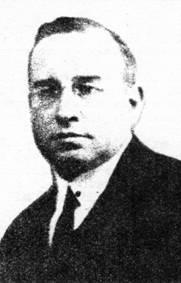
Max Born · Science & Medicine
Co-founder of quantum mechanics who gave the statistical interpretation of the wave function; Nobel Prize in Physics 1954
11 December 1882, Breslau, Germany (now Wrocław, Poland) — 5 January 1970, Göttingen, West Germany
Breslau · Göttingen · Frankfurt · Cambridge · Edinburgh
Max Born is recognized among Jewish contributors to Science & Medicine — Co-founder of quantum mechanics who gave the statistical interpretation of the wave function; Nobel Prize in Physics 1954
Origins and early life
Max Born was born on 11 December 1882 in Breslau, then in Germany and now Wrocław in Poland, the son of Gustav Born, professor of anatomy and embryology, and of Margarethe Kauffmann, who died when he was four. He was born into a Jewish family, and although he never practised his religion and at first refused to convert, he was baptised a Lutheran in March 1914, partly in deference to his wife and partly to assimilate into German society.
He studied at Breslau, Heidelberg, Zurich and Göttingen, under David Hilbert and Hermann Minkowski, and during the First World War, while working on sound ranging for the army, wrote his first book, on crystal lattices.
Work and career
A professor at Frankfurt from 1919, he went to Göttingen in 1921 and in twelve years, with James Franck, made it one of the world's foremost centres of physics, with Pauli, Heisenberg and Fermi among his assistants. In 1925, with Werner Heisenberg and Pascual Jordan, he gave matrix mechanics its mathematical form, and in July 1926 he published the now-standard reading of Schrödinger's wave function, as giving the probability of finding a particle.
In May 1933 he was one of six Jewish professors suspended at Göttingen, and he went into exile, first to Cambridge, then for six months to the Indian Institute of Science in Bangalore. From 1936 he held the Tait chair of natural philosophy in Edinburgh, and in 1939 he got as many friends and relatives as he could out of Germany, becoming a British subject the day before the war began.
Later years
In 1954, having retired to Bad Pyrmont in West Germany, he shared the Nobel Prize in Physics with Walther Bothe, for his fundamental research in quantum mechanics, especially for his statistical interpretation of the wavefunction. He died in Göttingen on 5 January 1970, at eighty-seven, and lies there under a gravestone bearing the quantum equation he had put on rigorous footing.
Verify and go deeper with these external references.
Source: Wikipedia — Max Born
This page is published in seven languages from an English source. The translations are reviewed, but a mistake can still slip through. If you spot one on this profile — a wrong word, a lost date, a sentence that says something the English does not — please tell us.
Co-founder of quantum mechanics who gave the statistical interpretation of the wave function; Nobel Prize in Physics 1954
Source: Wikipedia — Max Born
Similar Contributors

Niels Bohr

Claude Cohen-Tannoudji
Roy Glauber
Eugene Wigner
Felix Bloch