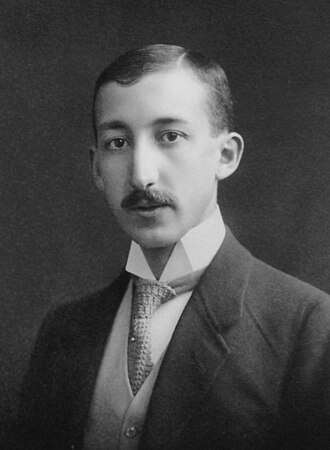
Henri Kagan · Science & Medicine
Chemist, pioneer of asymmetric catalysis (DIOP, nonlinear effects); Nobel Prize in Chemistry 2026
15 December 1930, Boulogne-Billancourt, France
Paris · Orsay
Henri Kagan is recognized among Jewish contributors to Science & Medicine — Chemist, pioneer of asymmetric catalysis (DIOP, nonlinear effects); Nobel Prize in Chemistry 2026
Origins and early life
Henri Boris Kagan was born on 15 December 1930 in Boulogne-Billancourt, on the western edge of Paris, the son of Alexandre Abraham Kagan, an engineer, and of Adeline Celniker. His mother had been born in Białystok, then in the Russian Empire, to Osip Celniker and Chana-Gitel Trilling, and the Trillings were a Jewish family of that city: Chana-Gitel's brother Oswald was the father of the MIT engineer Leon Trilling, who said he had come to America in 1940 as a Polish Jew.
No account by Kagan himself of his parents' origins has been found, so his place in this directory rests on descent, through that maternal grandmother, and on genealogical records rather than on anything he has said.
Work and career
After schooling in Guéret, Sceaux and Paris he studied at the Sorbonne and at the École nationale supérieure de chimie de Paris, joined the CNRS as a researcher in 1954 and received his doctorate at the Collège de France in 1960. In 1968 he moved to the Université Paris-Sud at Orsay to direct its laboratory of stereoselective synthesis, became a full professor there in 1973 and has been professor emeritus since 1999.
In 1971 he showed that a rhodium catalyst carrying DIOP, a chiral diphosphine with two-fold symmetry that he designed with Dang Tuan Phat, could hydrogenate an alkene into a large excess of one of its two mirror-image forms, and the many ligands built on that model now support catalysts used across the pharmaceutical industry. In 1986 his team reported the first nonlinear effects in asymmetric catalysis, where the purity of the product no longer follows that of the catalyst in a straight line, and he gave the mathematical models that describe them, now also discussed in research on the origin of life.
Recognition
When the 2001 Nobel Prize in Chemistry rewarded three other pioneers of asymmetric catalysis and left him out, French scientists protested and the research minister Roger-Gérard Schwartzenberg wrote to the Nobel Foundation; that year he received the Wolf Prize in Chemistry, and in 2005 the Benjamin Franklin Medal. On 7 October 2026, at the age of ninety-five, he was awarded the Nobel Prize in Chemistry jointly with the Japanese chemist Kenso Soai, for the discovery of nonlinear effects and autocatalysis in asymmetric organic synthesis.
Verify and go deeper with these external references.
Source: Nobel Prize Chemistry 2026 / Wikipedia — Henri B. Kagan
This page is published in seven languages from an English source. The translations are reviewed, but a mistake can still slip through. If you spot one on this profile — a wrong word, a lost date, a sentence that says something the English does not — please tell us.
Chemist, pioneer of asymmetric catalysis (DIOP, nonlinear effects); Nobel Prize in Chemistry 2026
Source: Nobel Prize Chemistry 2026 / Wikipedia — Henri B. Kagan
Similar Contributors
George de Hevesy

Arieh Warshel

Herbert Brown

Jerome Karle

Martin Karplus
