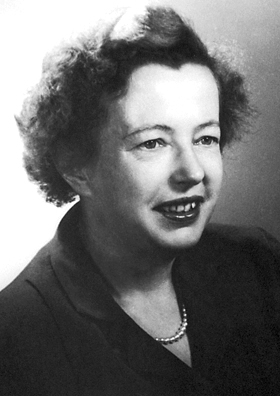
Frank Wilczek · Science & Medicine
Theoretical physicist who discovered asymptotic freedom with David Gross and named the axion and anyons; Nobel Prize in Physics 2004
15 May 1951, Mineola, New York, United States
Queens · Chicago · Princeton · Cambridge (Massachusetts)
Frank Wilczek is recognized among Jewish contributors to Science & Medicine — Theoretical physicist who discovered asymptotic freedom with David Gross and named the axion and anyons; Nobel Prize in Physics 2004
Origins and early life
Frank Anthony Wilczek was born in Mineola, New York, on 15 May 1951 and grew up in Glen Oaks, in Queens, the grandson of immigrants who had come from Poland on his father's side and from Italy, near Naples, on his mother's.
Work and career
In a conversation published by István and Magdolna Hargittai in 2006 he said that his paternal grandfather was Jewish, that his other grandparents were Catholic and that he was brought up as a Catholic; his place in this directory rests on descent, through that grandfather. After the public schools of Queens he took a degree in mathematics at the University of Chicago in 1970, then moved at Princeton from mathematics to physics, under David Gross.
In 1973, still a graduate student, he found with Gross that the strong force between quarks weakens as they come closer and grows as they are pulled apart, a property called asymptotic freedom. David Politzer reached the same result independently, the discovery opened the way to quantum chromodynamics, and Wilczek took his doctorate in 1974. In 1978 he showed, independently of Steven Weinberg, that a symmetry proposed to solve a puzzle of the strong force implies a new particle, which he named the axion and which is still sought as a possible component of dark matter.
In 1982 he gave the name anyons to particles that can exist only in two dimensions and are neither fermions nor bosons, and in 2012 he proposed the idea of time crystals.
Recognition
He shared the 2004 Nobel Prize in Physics with David Gross and David Politzer for the discovery of asymptotic freedom in the theory of the strong interaction, and in 2022 he received the Templeton Prize. He is the Herman Feshbach Professor of Physics at the Massachusetts Institute of Technology and has written for a wide public, from Longing for the Harmonies, with his wife Betsy Devine, in 1988, to A Beautiful Question in 2015.
Verify and go deeper with these external references.
Source: Wikipedia — Frank Wilczek
This page is published in seven languages from an English source. The translations are reviewed, but a mistake can still slip through. If you spot one on this profile — a wrong word, a lost date, a sentence that says something the English does not — please tell us.
Theoretical physicist who discovered asymptotic freedom with David Gross and named the axion and anyons; Nobel Prize in Physics 2004
Source: Wikipedia — Frank Wilczek