Arthur Ashkin · Science & Medicine
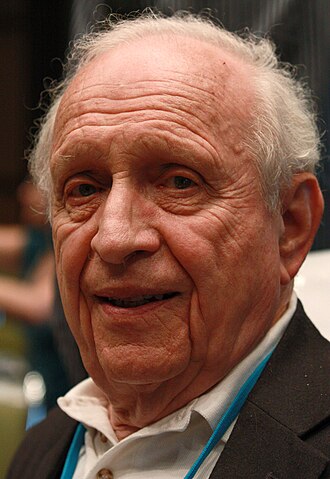
Physicist at Bell Labs who invented optical tweezers and applied them to living cells; Nobel Prize in Physics 2018
2 September 1922, Brooklyn, New York, United States — 21 September 2020, Rumson, New Jersey, United States
Brooklyn · New York · Ithaca · Holmdel · Rumson
Arthur Ashkin is recognized among Jewish contributors to Science & Medicine — Physicist at Bell Labs who invented optical tweezers and applied them to living cells; Nobel Prize in Physics 2018
Origins and early life
Arthur Ashkin was born in Brooklyn, New York, on 2 September 1922, the son of Isadore Ashkin, a dental technician who had come through Ellis Island from the Russian Empire, and of Anna Fishman, also an immigrant. The Nobel Foundation states that he was born into a family with a Ukrainian-Jewish background; his elder brother Julius, also a physicist, worked on the atomic bomb at Los Alamos. He entered Columbia College in 1940 to study physics, spent the war as a technician at the Columbia Radiation Laboratory building magnetrons for radar, graduated in 1947 and took his doctorate at Cornell in 1952.
Work and career
Hired that year by Bell Labs, where he spent his whole career, he moved from microwave work to lasers in the early sixties, long interested in how the momentum of light could move matter. In 1970 he published his first paper on trapping small particles with the radiation pressure of laser light, and in 1971 he levitated tiny glass spheres. In 1986 he described the single-beam trap known as optical tweezers, which pulls small particles towards the centre of a focused laser beam and holds them there; in 1987 he used it to capture living bacteria unharmed.
Optical tweezers became a standard tool in biology, and his work formed the basis for Steven Chu's cooling and trapping of atoms, rewarded with the 1997 Nobel Prize. He retired from Bell Labs in 1992 after forty years, with 47 patents, and went on working in a laboratory at his home in Rumson, New Jersey.
Recognition
In 2018, at ninety-six, he received one half of the Nobel Prize in Physics for the optical tweezers and their application to biological systems, the other half going to Gérard Mourou and Donna Strickland; he remained the oldest laureate until 2019. He died in Rumson on 21 September 2020, aged ninety-eight, survived by Aline, whom he had met at Cornell and married in 1954, and by their three children.
Verify and go deeper with these external references.
Source: Wikipedia — Arthur Ashkin
This page is published in seven languages from an English source. The translations are reviewed, but a mistake can still slip through. If you spot one on this profile — a wrong word, a lost date, a sentence that says something the English does not — please tell us.
Physicist at Bell Labs who invented optical tweezers and applied them to living cells; Nobel Prize in Physics 2018
Source: Wikipedia — Arthur Ashkin
Similar Contributors

Donald Glaser

Lev Landau

Niels Bohr
Roy Glauber

Albert Einstein
