Lewis Strauss
Lewis Strauss · Philosophy & Social Sciences
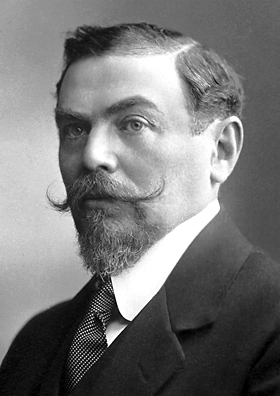
Chairman of the Atomic Energy Commission who pressed for the hydrogen bomb and built Atoms for Peace, and who engineered the 1954 hearing against J. Robert Oppenheimer that the Department of Energy vacated in 2022; president of Congregation Emanu-El of New York for a decade from 1938.
31 January 1896, Charleston, West Virginia, United States — 21 January 1974, Brandy Station, Virginia, United States
Richmond · New York · Washington
Lewis Strauss is recognized among Jewish contributors to Philosophy & Social Sciences — Chairman of the Atomic Energy Commission who pressed for the hydrogen bomb and built Atoms for Peace, and who engineered the 1954 hearing against J. Robert Oppenheimer that the Department of Energy vacated in 2022; president of Congregation Emanu-El of New York for a decade from 1938.
Origins and early life
Lewis Lichtenstein Strauss was born in Charleston, West Virginia, on 31 January 1896 and grew up in Richmond, the son of Lewis Strauss, a shoe wholesaler, and of Rosa Lichtenstein, both from German and Austrian Jewish families.
Work and career
He gave up a place at university in 1917 to work unpaid as Herbert Hoover's private secretary, followed him through the relief of Belgium and the American Relief Administration, and spent the years after the war on Jewish relief in a ruined Europe. He then made a fortune at Kuhn, Loeb & Co., served in the naval reserve between the wars, ran ordnance work through the Second World War and came out of it a rear admiral.
For ten years from 1938 he was president of Congregation Emanu-El in New York, he worked for the American Jewish Committee, and after cancer took his mother and then his father in the nineteen-thirties he became a trustee of the Memorial Hospital for cancer in New York. He was one of the first commissioners of the Atomic Energy Commission, appointed in 1946, pressed harder than anyone for the hydrogen bomb, and as its chairman from 1953 built the Atoms for Peace programme that Eisenhower announced that December.
He also, in 1954, engineered the hearing that stripped J. Robert Oppenheimer of his security clearance and ended his public life, a proceeding the United States Department of Energy formally vacated on 16 December 2022, finding that the Commission had broken its own rules and that the process had been biased and unfair. The Senate refused him as Eisenhower's Secretary of Commerce on 19 June 1959, forty-six votes to forty-nine, one of the very few Cabinet nominees ever rejected.
Later years
He died at Brandy Station, Virginia, on 21 January 1974, ten days short of seventy-eight; half a century later a film put his face in front of millions who had never heard of the Atomic Energy Commission.
Verify and go deeper with these external references.
Source: Wikipedia; Britannica; US Senate; US Department of Energy
This page is published in seven languages from an English source. The translations are reviewed, but a mistake can still slip through. If you spot one on this profile — a wrong word, a lost date, a sentence that says something the English does not — please tell us.
Chairman of the Atomic Energy Commission who pressed for the hydrogen bomb and built Atoms for Peace, and who engineered the 1954 hearing against J. Robert Oppenheimer that the Department of Energy vacated in 2022; president of Congregation Emanu-El of New York for a decade from 1938.
Source: Wikipedia; Britannica; US Senate; US Department of Energy
Similar Contributors
Alfred Fried

Arseny Roginsky
Dafna Nundi Izraeli

Douglas Diamond

Eleazar Sukenik
