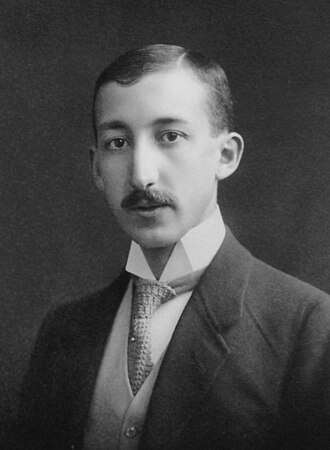
Michael Levitt · Science & Medicine
Computational Chemistry
1947, Pretoria, South Africa
United States (Stanford, California) · United Kingdom · Israel
Michael Levitt is recognized among Jewish contributors to Science & Medicine — Computational Chemistry
Origins and early life
Michael Levitt was born in Pretoria on 9 May 1947 to a Jewish family from Plungė in Lithuania — his father from Lithuania, his mother from Bohemia — and went to Sunnyside Primary and Pretoria Boys High School before the family moved to England when he was fifteen.
Work and career
He took a first in physics at King's College London in 1967, visited Israel that year for the first time, and went to Cambridge as a doctoral student in computational biology at the Laboratory of Molecular Biology, where he wrote a program for studying the shapes molecules can take. That program was the beginning of the thing he is known for. A protein is too large for quantum mechanics, which would take the age of the universe to compute, and too subtle for classical physics, which cannot describe the few atoms where the chemistry actually happens; with Arieh Warshel and Martin Karplus he built models that use both at once, quantum equations for the small active region and classical mechanics for everything around it.
It let a computer follow an enzyme doing its work, and molecular simulation became a working instrument of biology rather than a picture of one. He returned to Israel in 1979 to the Weizmann Institute, became an Israeli citizen in 1980 and held a chair in chemical physics there until 1987, then moved to Stanford as professor of structural biology, dividing his time between the two countries. He shared the 2013 Nobel Prize in Chemistry with Karplus and Warshel, and holds British, American and Israeli citizenship.
Verify and go deeper with these external references.
Source: Nobel Prize Chemistry 2013
This page is published in seven languages from an English source. The translations are reviewed, but a mistake can still slip through. If you spot one on this profile — a wrong word, a lost date, a sentence that says something the English does not — please tell us.
Computational Chemistry
Source: Nobel Prize Chemistry 2013