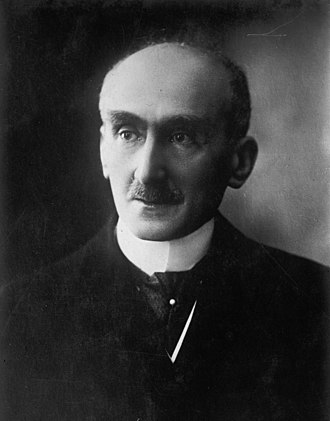
Imre Kertész · Arts & Literature
Hungarian survivor of Auschwitz and Buchenwald, author of Fatelessness; Nobel Prize in Literature 2002 for writing that upholds the fragile experience of the individual against the barbaric arbitrariness of history
9 November 1929, Budapest, Hungary — 31 March 2016, Budapest, Hungary
Budapest · Berlin
Imre Kertész is recognized among Jewish contributors to Arts & Literature — Hungarian survivor of Auschwitz and Buchenwald, author of Fatelessness; Nobel Prize in Literature 2002 for writing that upholds the fragile experience of the individual against the barbaric arbitrariness of history
Origins and early life
Imre Kertész was born in Budapest on 9 November 1929 to László Kertész and Aranka Jakab, secular Jewish parents, and grew up a non-observant Jew, and, in the Swedish Academy's words, he regarded his kinship with the concept of Jew as a definition inflicted on him by the enemy; in 1940 he was placed in a special class for Jewish pupils at secondary school.
Work and career
In 1944, at fourteen, he was caught in a police round-up on his way to school and deported with thousands of other Budapest Jews to Auschwitz, where he escaped immediate death by claiming to be sixteen and a worker. From there he was sent to Buchenwald and liberated in 1945; a camp report of 18 February 1945, which the Buchenwald memorial sent him as he prepared his Nobel lecture, had listed prisoner 64,921, Imre Kertész, among that day's dead.
Back in Budapest he worked for the newspaper Világosság until it dismissed him in 1951, and after two years of military service he lived as an independent writer and translator of Nietzsche, Freud, Wittgenstein and Canetti. His first novel, Fatelessness, in which fifteen-year-old György Köves is deported and survives by taking the camps as an everyday existence like any other, was at first rejected and, published in 1975, met with silence.
He wrote of that silence in Fiasco, in 1988, and completed the trilogy with Kaddish for a Child Not Born, in 1990, a title that refers to the Jewish prayer for the dead.
Recognition
On 10 October 2002 the Swedish Academy awarded him alone the Nobel Prize in Literature for writing that upholds the fragile experience of the individual against the barbaric arbitrariness of history, the first such prize for a Hungarian writer.
Later years
In his Nobel lecture in Stockholm on 7 December 2002 he spoke of that report and summed up his story: in short, I died once, so I could live. He wrote the screenplay for the 2005 film of Fatelessness, divided his later years between Budapest and Berlin, and died at home in Budapest on 31 March 2016, aged eighty-six, after years of Parkinson's disease.
Verify and go deeper with these external references.
Source: Wikipedia — Imre Kertész / NobelPrize.org Literature 2002
This page is published in seven languages from an English source. The translations are reviewed, but a mistake can still slip through. If you spot one on this profile — a wrong word, a lost date, a sentence that says something the English does not — please tell us.
Hungarian survivor of Auschwitz and Buchenwald, author of Fatelessness; Nobel Prize in Literature 2002 for writing that upholds the fragile experience of the individual against the barbaric arbitrariness of history
Source: Wikipedia — Imre Kertész / NobelPrize.org Literature 2002
Similar Contributors

Boris Pasternak

László Krasznahorkai

Nelly Sachs

Elie Wiesel

Elfriede Jelinek