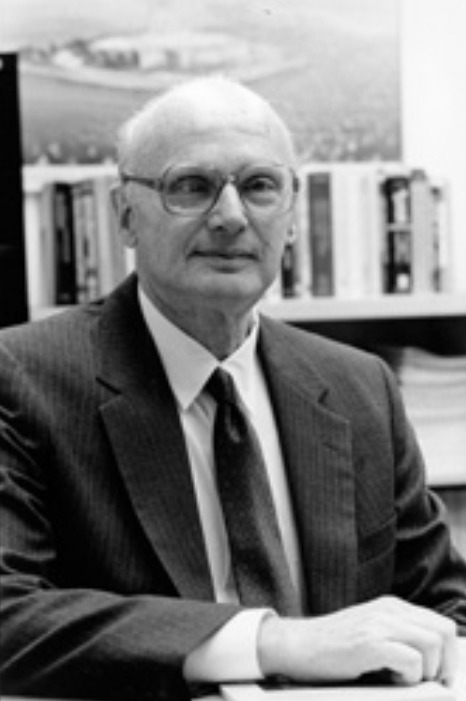
Gary Becker · Economics & Business
Economic Analysis of Human Behavior
1930, Pottsville, Pennsylvania, United States — 2014, Chicago, Illinois, United States
United States
Gary Becker is recognized among Jewish contributors to Economics & Business — Economic Analysis of Human Behavior
Origins and early life
Gary Becker was born into a Jewish family in Pottsville, Pennsylvania, on 2 December 1930. He took his bachelor's degree at Princeton in 1951 and his doctorate at the University of Chicago in 1955, writing a thesis called The Economics of Discrimination; of his teachers there he singled out Milton Friedman, whom he called by far the greatest living teacher he had ever had.
Work and career
He taught at Chicago, moved to Columbia in 1957 while doing research at the National Bureau of Economic Research, returned to Chicago in 1970 and took a joint appointment in its sociology department in 1983. His work did something economists had not done: it took the tools of microeconomics into territory that had belonged to sociology — racial discrimination, crime and punishment, how families decide, why people become addicted, what a human being invests in an education. Colleagues called the field human capital, and it changed what economics considered its business.
Recognition
He won the John Bates Clark Medal in 1967 and the Nobel Memorial Prize in Economic Sciences in 1992, cited for extending microeconomic analysis to a wide range of human behaviour including nonmarket behaviour. The National Medal of Science followed in 2000 and the Presidential Medal of Freedom in 2007. He died in Chicago on 3 May 2014.
Verify and go deeper with these external references.
Source: Nobel Prize Economics 1992
This page is published in seven languages from an English source. The translations are reviewed, but a mistake can still slip through. If you spot one on this profile — a wrong word, a lost date, a sentence that says something the English does not — please tell us.
Economic Analysis of Human Behavior
Source: Nobel Prize Economics 1992
Similar Contributors

Paul Krugman

Joseph Stiglitz

Wassily Leontief

Ben Bernanke

Gary Cohn