David Cohen (David the Red Sea Singer)
David Cohen (David the Red Sea Singer) · Arts & Literature
Israeli singer of the 1960s, billed across Europe as David the Red Sea Singer, who carried Hebrew and Israeli song from an Eilat nightclub to Dutch television and cut a record for the Dutch fundraising campaign for Israel during the Six-Day War; son of the Yemenite Cohen family of Neve Tzedek and brother of Itamar Cohen
25 November 1942, Tel Aviv, Israel
Israel, Europe and America
David Cohen (David the Red Sea Singer) is recognized among Israeli contributors to Arts & Literature — Israeli singer of the 1960s, billed across Europe as David the Red Sea Singer, who carried Hebrew and Israeli song from an Eilat nightclub to Dutch television and cut a record for the Dutch fundraising campaign for Israel during the Six-Day War; son of the Yemenite Cohen family of Neve Tzedek and brother of Itamar Cohen
Name and family
David Cohen, born in Tel Aviv on 25 November 1942, is the Israeli singer who was billed across Europe in the 1960s as David the Red Sea Singer. He is not to be confused with the countertenor David D'Or, born in 1965. He is a son of the family of Yaakov Shlomo Cohen, who came up from Yemen in the Second Aliyah and became one of the leaders of the Yemenite Association in the country: his brother Itamar Cohen was the soloist of the Nahal army troupe, his brother Shlomo Cohen was Suleiman the Great, a pioneer of Israeli communal singing, and Izhar Cohen, who won the Eurovision Song Contest for Israel in 1978, is his nephew.
The family attests to that line, and the Hebrew encyclopaedia notes on its side that the youngest son of that house, David, was likewise in the Nahal troupe, and that a soloist called Dudu Cohen sang Anat on the troupe's 1962 record — one of the rarest discs the army bands ever made. Trouw, interviewing him in August 1967, wrote that his father led the prayers in the synagogue and that the family had come from Yemen.
Beginnings, and Eilat
He began singing at twelve, sang in a small group, and after his military service the impresario Rafi Nelson took him on at the End of the World club in Eilat, on the Gulf of Aqaba, where he had the tourists singing and clapping with him and once, for a bet with the sea, performed under water in a diving suit. Then he left to see the world: by boat through Turkey and Greece to Venice, then Vienna, Berlin and Swiss cities, and on to the Netherlands, where he stayed.
De Telegraaf, in April 1967, was more precise: he had begun at twelve with four brothers, who all became professional singers and sang in American nightclubs; and it was in the army shows, with two of them, that he took to the stage.
On stage
He sang in Armenian, Greek, English, Hebrew, Spanish and Italian — and in Yiddish, on the 1968 film of Trinkt Le Chaim — while speaking three of those tongues, Hebrew, English and Spanish; the Dutch press of 1967, counting six languages on stage, already noted that he sang more than he spoke. He arranged folk songs and spirituals in his own way, accompanied himself on the guitar or on one of a collection of drums, and sang without a microphone.
The Netherlands, 1967–1968
He was on national television in the pop programme Fanclub on 10 February 1967 — De Telegraaf credited the whole episode's success to him and to a Tilburg beat group — and again on 5 May, on the same bill as Pink Floyd, the Kinks and Manfred Mann, and in Scala Variété in February 1968; he sang seven nights a week in the Bouwes clubs at Zandvoort, at Cobi Schreijer's folk tavern in Haarlem, at the Folk '67 festival in Utrecht beside Julie Felix, and in January 1968 he was one of the four Israelis — with Motke Hen and Rafi Nelson — who opened the folk club Jerusalem of Gold on the Amstel in Amsterdam.
The tours took him onto television in Switzerland, Austria, Germany and Belgium as well: Flemish television broadcast him on 24 August 1968 in the youth programme Tienerklanken, in an evening relayed from Ostend. The Jerusalem of Gold club, whose bill he shared, had opened on 15 January 1968; in July 1967 he had also sung in the Vondelpark for the World Wildlife Fund, and Het Parool called him 'a gifted boy — not only because he sings Israeli and Spanish songs superbly, but because he is so skilled on guitar and drum'.
When the summer season at Zandvoort ended, he and Rafi Nelson turned a houseboat into a little theatre and went on singing there — which is what the portrait captioned 'living on a boat' refers to.
Israel, wherever he sang
He carried Israel with him wherever he sang: at the great Purim night festival in Hilversum on 1 April 1967, in aid of Youth Aliyah; as the special attraction of the Independence Day celebration at the Kurhaus in The Hague that May; at the Hanukkah dinner of the Israeli restaurant Tel Aviv in Amsterdam that December; and, when the Six-Day War broke out, in a recording studio, where the Amsterdam label Basart had him cut We Shall Overcome and Oh, Eilat with half the net proceeds going to the Dutch fundraising campaign for Israel — Trouw wrote that during that war he had done a kind of public relations for his country in the Netherlands.
Records, then America
Three singles came out on the Dutch label Whamm — The Oriental Beat Goes On, Anu Nitgaber, Trinkt Le Chaim — and in March 1968 he left with Rafi Nelson, through the Dutch Jewish singer Leo Fuld, for six months in a New York café, then Mexico and the Netherlands Antilles. The Oriental Beat Goes On was cut on a Turkish melody arranged by Ted Powder and given words by Rafi Nelson, with Sometimes I Feel Like a Motherless Child on the reverse, and it launched a dance of the same name, shown on Fanclub by Helen Le Clerq's troupe.
Four years later the Dutch-Antillean press still counted him among the Israelis known abroad, beside the Ofarims, Chaim Topol, Rika Zaraï and Mike Brant. Later, under the name David Dor, he recorded five albums — Boi Teiman, Israeli-Yemenite folklore; Songs of the Armenian People; International; Spanish Nostalgia; Head to Head — sixty-one songs in Hebrew, Armenian, Spanish and English. The New York contract, obtained through Leo Fuld, was for the Sahbra, the Israeli club the Yiddish singer kept for ten years at 253 West 72nd Street; from there he was to go on to Mexico and the Dutch Antilles, and to return at the end of the year to cut six records for Basart.
In 2017 the Tel Aviv label Fortuna Records put a track credited to David Dor, Sapri Tama, on its compilation Da'asa: The Haunting Sounds of Yemenite-Israeli Funk 1973-1984 — the same song stands on his own International album.
Personal life
In 1968 he married Nicky, who is Swedish, and they had a daughter, Dorit; after their divorce he married Debra in 1979, to whom he is still married and with whom came Daniel and Dalit. He has six grandchildren, and lives today in Los Angeles.
Photographs, press cuttings and films gathered for this tribute. Each carries its source and its date.
Films
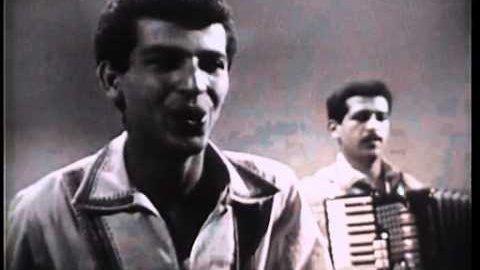
Baderech Latavor — בדרך לתבור
1960 · live in France
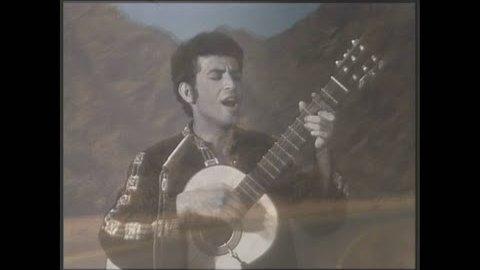
Haderech Le'Eilat — הדרך לאילת
1967
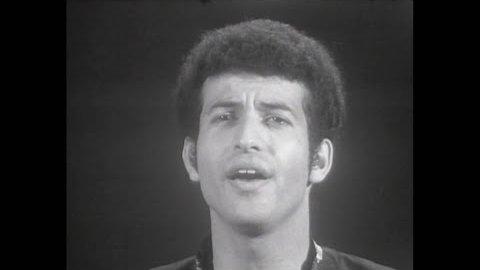
Anu Nitgaber — We Shall Overcome — אנו נתגבר
1968
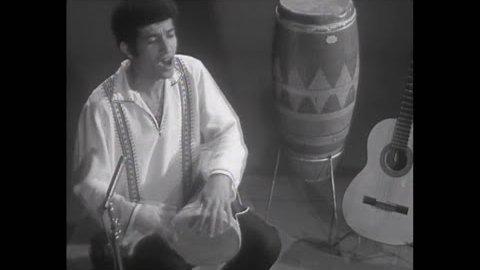
Dror Yikra — דרור יקרא
1968
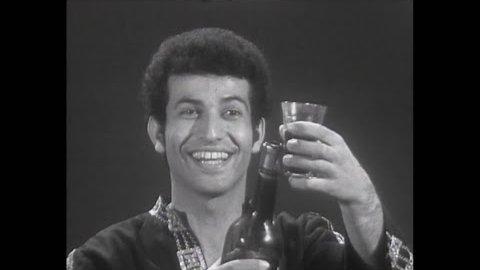
Trinkt Le Chaim — The Jewish Wedding Song (Yiddish)
1968
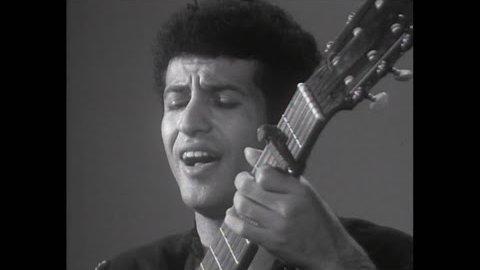
Yo Soy Un Hombre Del Campo
1968 · live
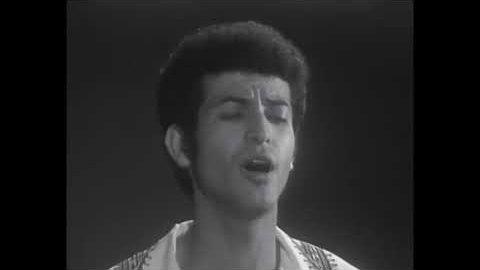
Shedematy — שדמתי
1968
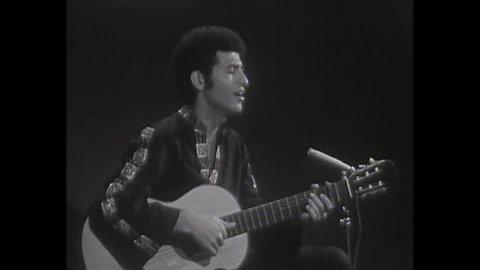
I'm Going Home — Poor Wayfaring Stranger
1968
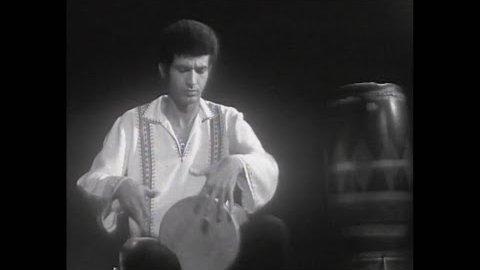
Darbuka drum solo
1968 · live
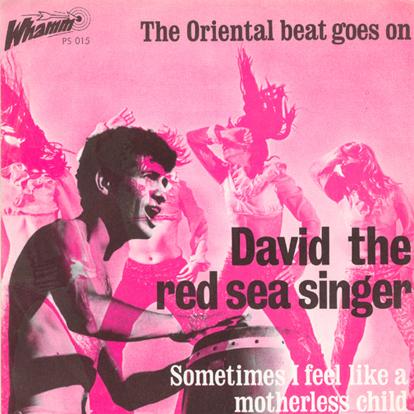
The Oriental Beat Goes On (Whamm PS 015)
1967
Channels and playlists
Documents published at the express request of the family, which supplied or authorised them.
Verify and go deeper with these external references.
Source: Nieuwsblad van het Noorden (17 mars 1967) et De Volkskrant (13 juin 1967), archives Delpher
This page is published in seven languages from an English source. The translations are reviewed, but a mistake can still slip through. If you spot one on this profile — a wrong word, a lost date, a sentence that says something the English does not — please tell us.
Israeli singer of the 1960s, billed across Europe as David the Red Sea Singer, who carried Hebrew and Israeli song from an Eilat nightclub to Dutch television and cut a record for the Dutch fundraising campaign for Israel during the Six-Day War; son of the Yemenite Cohen family of Neve Tzedek and brother of Itamar Cohen
Source: Nieuwsblad van het Noorden (17 mars 1967) et De Volkskrant (13 juin 1967), archives Delpher
Similar Contributors

Ophélie Winter

Shoshana Damari

Noa Kirel

Chava Alberstein

Dana International
